





The Hera Probe Flies by Mars and Deimos
On March 12, 2025, the European Space Agency’s Hera spacecraft performed a flyby of Mars, marking a key milestone in its journey toward the Didymos-Dimorphos asteroid system. This close approach to the Red Planet provided Hera with a gravity assist, allowing it to adjust its trajectory while offering a rare scientific opportunity: a close observation of Deimos, one of Mars’ two moons.
Why Did Hera Fly by Mars?
Interplanetary space is vast, and every kilogram of fuel matters. Instead of relying solely on its onboard propulsion, Hera employed a gravity assist maneuver to alter its velocity and flight path. During the flyby, the spacecraft passed within 5,000 kilometers of Mars’ surface, using the planet’s gravitational pull to fine-tune its course. Thanks to this maneuver, Hera is now on a precise trajectory toward the asteroid system it is set to study

Hera flies by Mars and Deimos: an unexpected exploration
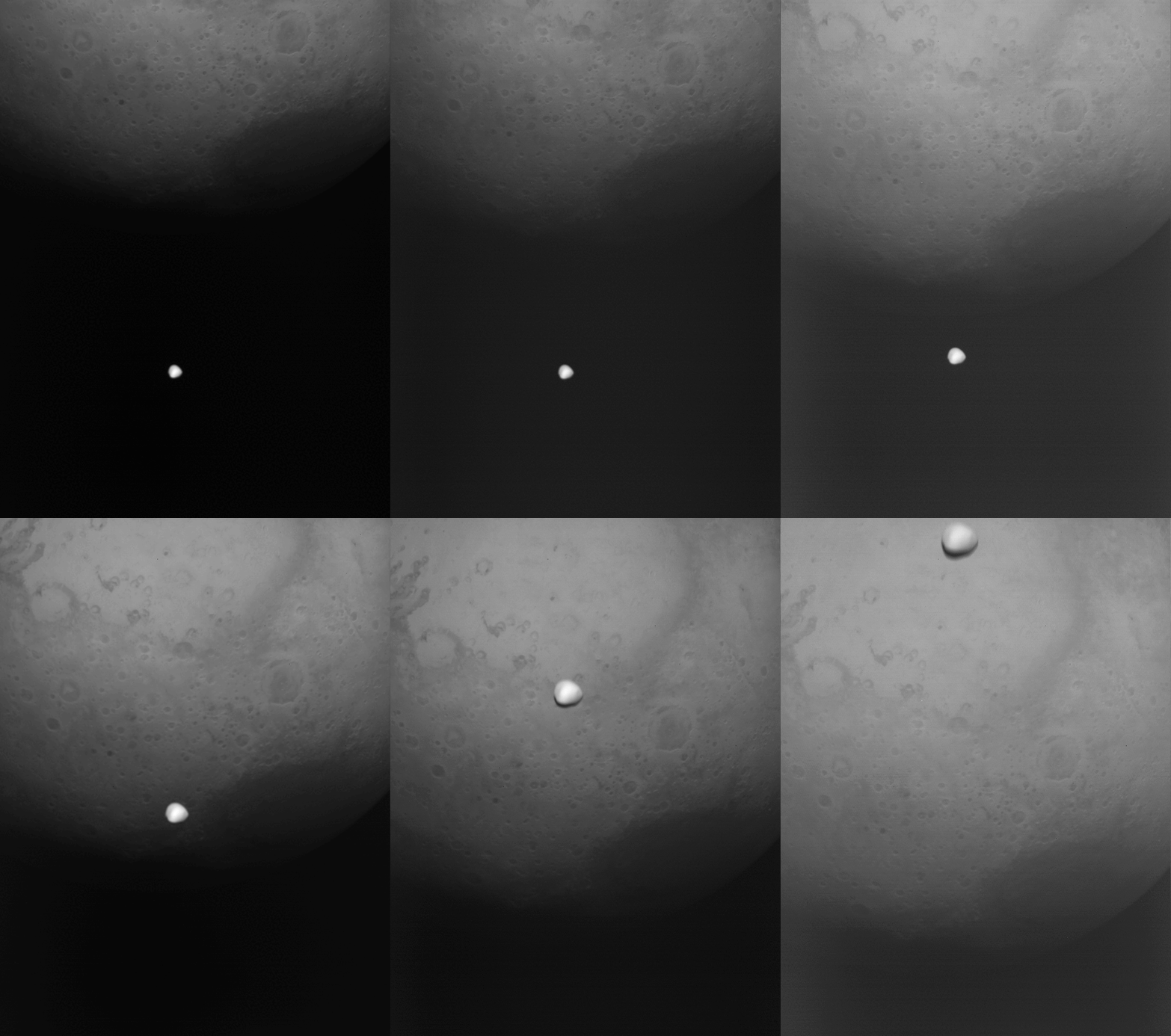
One of the most fascinating aspects of this flyby was Hera’s close approach to Deimos, the smaller and more distant of Mars’ two moons. Measuring just 12 km in diameter, Deimos remains a mysterious object, rarely observed up close. During its pass at approximately 1,000 km from Deimos, Hera activated its scientific instruments to capture high-resolution images and gather data. This unique opportunity will help scientists learn more about the moon’s composition, surface features, and its relationship with Phobos, Mars’ other moon.
First Images and Expected Results
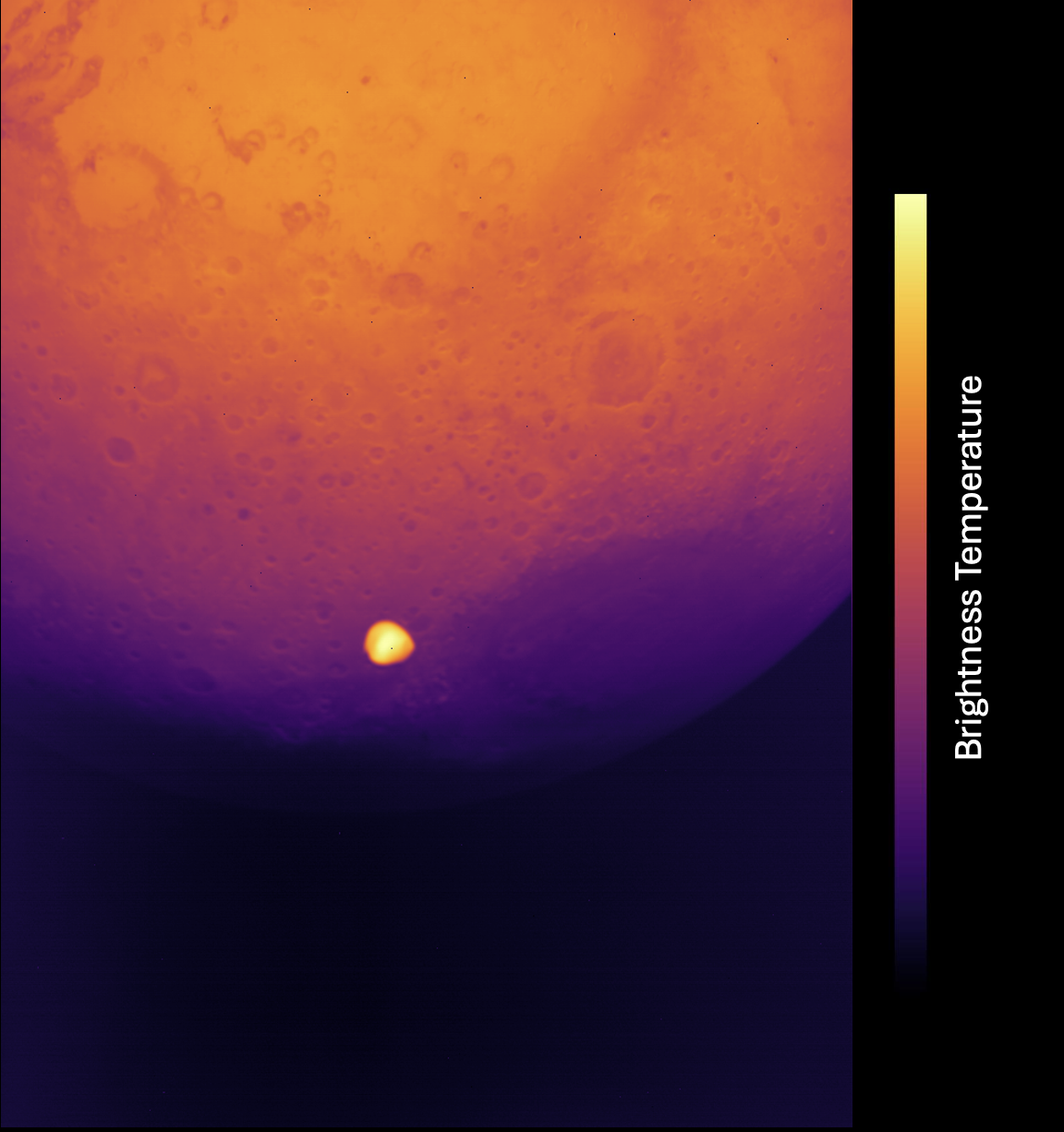
The images captured by Hera are the most detailed ever taken of Deimos from Martian orbit. Using its navigation cameras and hyperspectral imaging instruments, the spacecraft was able to photograph the moon’s surface with unprecedented precision. These observations will be compared to those from previous missions that studied Deimos, including ESA’s Mars Express and the UAE’s Hope probe. The data will help determine whether this moon is a captured asteroid or a remnant from the formation of the Martian system.
Heading to Didymos!
With this successful flyby, Hera continues its journey toward the Didymos system, where it is expected to arrive in 2026. This mission, which complements the DART impact, will help assess the effectiveness of asteroid deflection and provide crucial data for planetary defense. In the meantime, scientists will analyze the valuable images and measurements of Deimos, offering a fresh perspective on this still mysterious Martian moon.