





Euclid Mission: First Results on the Dark Universe
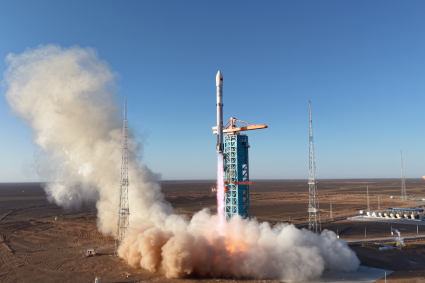
Launched in July 2023 by the European Space Agency (ESA), the Euclid space telescope marks the beginning of a new era in cosmic exploration. The Euclid mission has an ambitious goal: to map the Universe with unprecedented precision in order to unlock the mysteries of dark matter and dark energy. Designed to study the evolution of cosmic structure over billions of light-years, Euclid stands out for its ability to observe vast regions of the sky in great depth, by combining infrared and optical observations. On March 19, 2025, ESA released an exceptional first dataset, showcasing the mission’s scientific potential. In just one week of observation, Euclid has already detected over 26 million galaxies, revealing deep and complex structures across space-time. This first glimpse marks the beginning of a three-dimensional cosmic atlas that promises to transform our understanding of the dark Universe.

Scientific Objectives of the Euclid Mission
The Euclid mission was designed to answer a fundamental question in modern cosmology: what structures and accelerates the expansion of the Universe? To do so, the telescope aims to map the distribution of galaxies over more than 10 billion light-years, thereby tracing the evolution of large-scale cosmic structure.
Two phenomena are at the heart of this scientific quest:
-
Dark Matter: Although it cannot be observed directly, dark matter exerts a measurable gravitational influence on galaxies. By studying the distortion of images of distant galaxies — an effect known as weak gravitational lensing — Euclid can infer the presence and distribution of this invisible matter.
-
Dark Energy: This hypothetical force is thought to be responsible for the accelerating expansion of the Universe, yet it remains largely misunderstood. By precisely measuring the distances and velocities of galaxies, Euclid seeks to determine how this energy has influenced the evolution of the cosmos over time.

To achieve these objectives, Euclid relies on two major scientific instruments:
-
A visible light imager (VIS), capable of capturing extremely high-resolution images.
-
A near-infrared spectrometer and photometer (NISP), designed to measure the distances of galaxies through their redshift.
By combining these two approaches — imaging and spectroscopy — Euclid provides a unique three-dimensional view of the Universe, capable of revealing the cosmic web and the interactions between galaxies, dark matter, and dark energy.

First Scientific Results from the Euclid Telescope
March 19, 2025, marks a major milestone for the Euclid mission: the official release of its first observational data. Although these results cover only a small portion of the sky, they already demonstrate the unparalleled power of the onboard instruments. In just one week, Euclid observed three regions of the sky known as “deep fields,” covering a total area of 63 square degrees — more than 300 times the size of the full Moon as seen from Earth. These observations led to the detection of 26 million galaxies, some located over 10.5 billion light-years away, providing a glimpse into cosmic structures from the early Universe.
Among the most remarkable results
-
The detection of highly luminous quasars, evidence of rapidly growing supermassive black holes.
-
The discovery of hundreds of potential gravitational lenses — phenomena predicted by general relativity where the light from distant galaxies is bent by the mass of foreground objects.
-
The identification of over 380,000 galaxies, classified with the help of artificial intelligence and citizen science contributions.
These early data confirm that Euclid can achieve unprecedented cosmological depth while maintaining exceptional spatial resolution. They foreshadow the richness of upcoming surveys, which will eventually cover one-third of the sky (14,000 square degrees) and enable the construction of a full 3D atlas of the observable Universe. The results also demonstrate the telescope’s stability and the high performance of its instruments, validating its ability to fulfill mission objectives over several years. With this first milestone achieved, Euclid is already proving to be a crucial tool in the quest to understand the fundamental laws governing the cosmos.

Deep Fields, International Cooperation, and Future Prospects
The first deep fields observed by Euclid reveal galaxies located up to 10.5 billion light-years away, offering an unprecedented glimpse into the early Universe. These regions will be revisited regularly to collect more light and uncover even more distant structures, helping to reconstruct cosmic history. The mission is based on close cooperation between ESA and NASA, with the latter providing key components for the infrared instrumentation and contributing to scientific analysis. This collaboration enhances the global impact of the project.
By 2030, Euclid will have surveyed one-third of the sky, mapping more than 1.5 billion galaxies. This data will provide deeper insights into the evolution of the Universe, the nature of dark energy, and allow scientists to test the foundations of cosmological physics.
Source
Read the article announcing the first results on the ESA website here and on the NASA website here.