

Australian Space Cooperation: Australia Signs Agreements with NASA, ESA, and the United Kingdom


Australian Space Cooperation: Australia Signs Agreements with NASA, ESA, and the United Kingdom
Australia is confirming its ambition to become a major player in the global space sector. During the 74th International Astronautical Congress (IAC 2025) held in Sydney, the Australian Space Agency (ASA) announced a series of international agreements and partnerships that strengthen its position in exploration, scientific research, and commercial launches. From NASA to ESA, the United Kingdom, and Sweden, the country continues to weave an extensive network of collaborations aimed at making Australia a strategic space hub in the Southern Hemisphere.
A Cooperation Agreement in Preparation Between ESA and Australia
One of the week’s major announcements was the launch of official negotiations between the European Space Agency (ESA) and the Australian Space Agency (ASA) to establish a bilateral cooperation agreement. This accord will pave the way for greater participation of Australian researchers, universities, and companies in ESA’s scientific programs — including Earth observation, robotic exploration, space communications, and deep space missions.
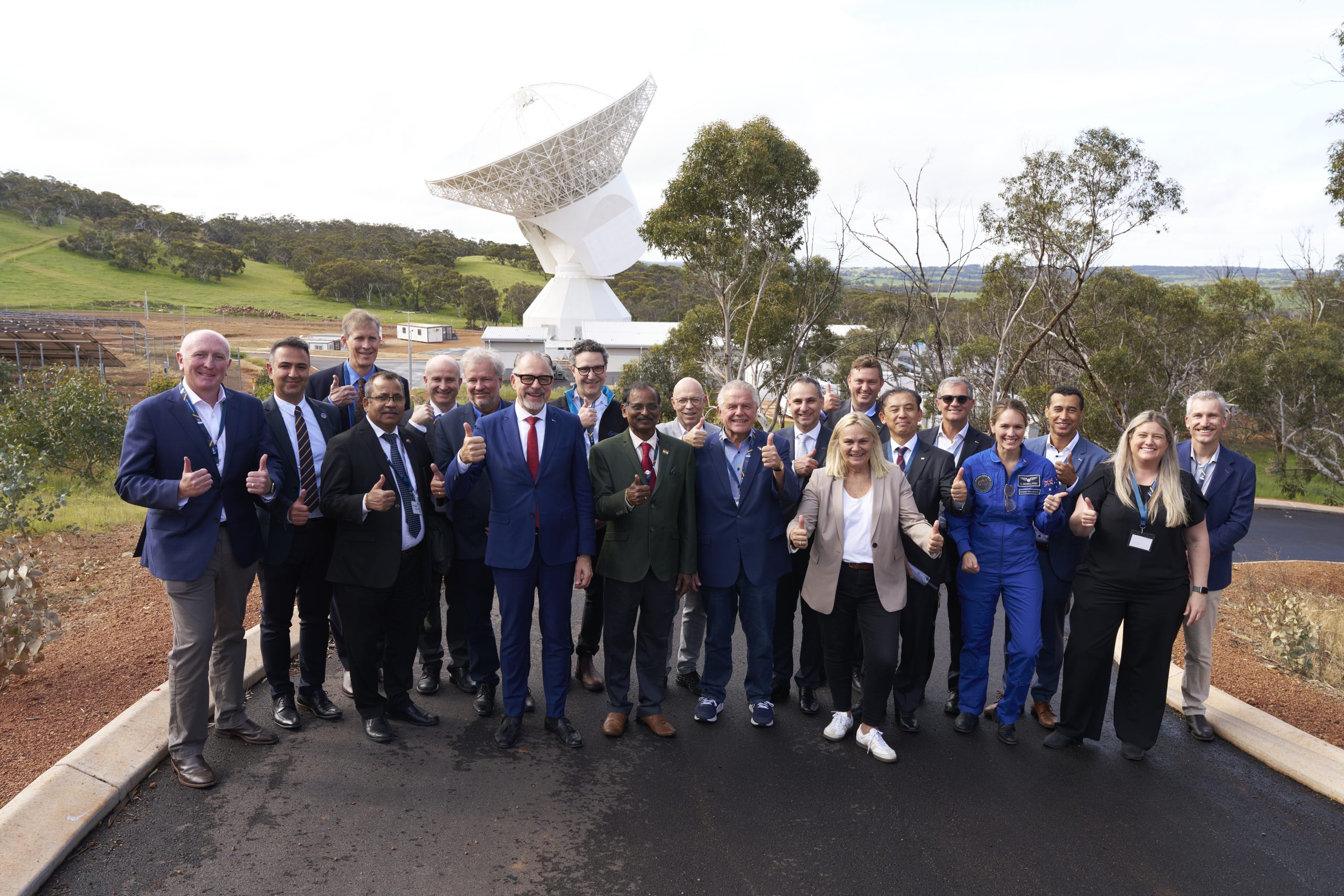
ESA also took the opportunity to inaugurate its new 35-meter deep space antenna “New Norcia 3,” located 115 km north of Perth. The antenna joins ESA’s Estrack network and will enhance communications with the agency’s deep-space probes such as Juice, BepiColombo, and Solar Orbiter.
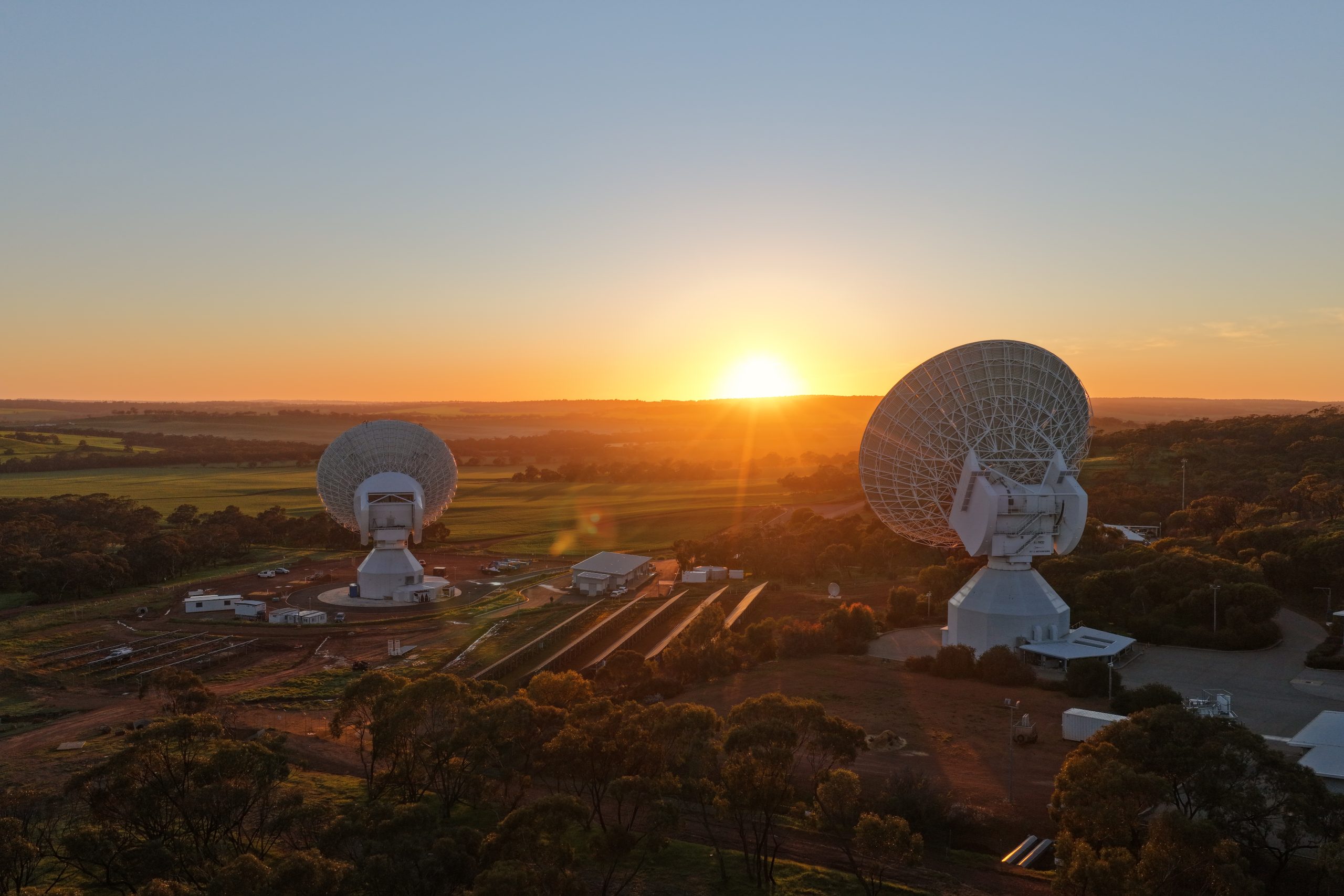
Developed in close collaboration with the Australian Space Agency, this high-precision facility—equipped with cryogenic receivers and a powerful transmitter—will also support missions from partner agencies such as NASA, JAXA, and ISRO.
A New Framework Agreement with NASA
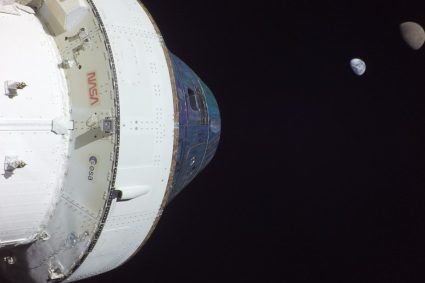
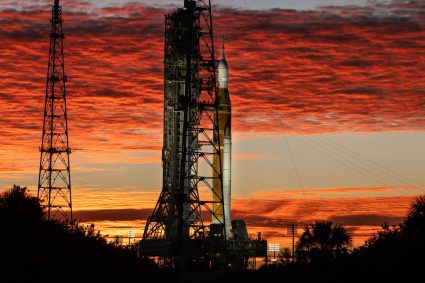
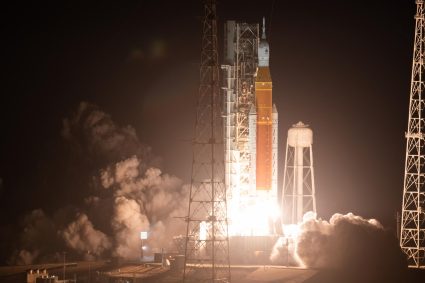
On September 30, 2025, NASA and ASA signed a framework agreement in Sydney to strengthen cooperation in aeronautics, space exploration, and planetary science. The agreement aims to facilitate Australian participation in U.S. programs — particularly the Artemis program and future lunar and Martian missions.
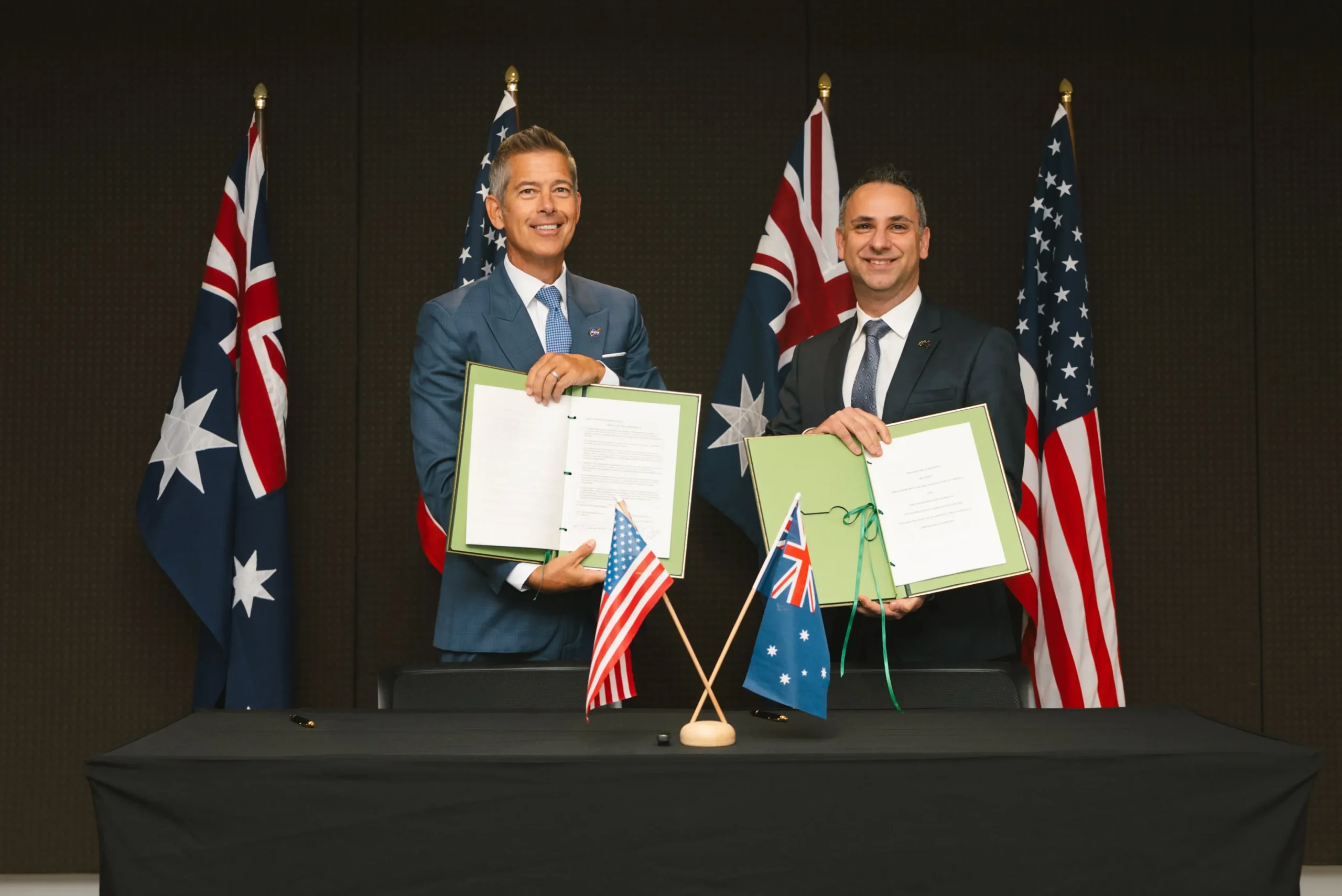
At the same time, the Australian government announced plans to establish a Space Framework Agreement, a high-level treaty designed to structure and expand collaborations between space agencies, industries, and research institutions.
A Legal Framework Since 2024 for U.S. Launches from Australian Soil
In 2024, Australia and the United States signed the Technology Safeguards Agreement (TSA) — a treaty governing the handling of sensitive technologies during launches conducted by U.S. entities from Australian facilities.
This framework enables operators such as SpaceX, Blue Origin, and Rocket Lab to operate from Australian soil while complying with U.S. export control laws (ITAR).
Thanks to this treaty, facilities like Bowen Orbital Spaceport (Gilmour Space) and the future Space Centre Australia can now host international commercial launches.
The “Space Bridge” Between the United Kingdom and Australia
Since 2021, the Australian Space Agency (ASA) and the UK Space Agency (UKSA) have maintained a partnership known as the UK–Australia Space Bridge, which promotes cooperation in research, regulation, and the space industry.
In October 2025, during the Sydney IAC, both agencies renewed and re-signed the agreement to reaffirm their shared commitment to strengthening bilateral collaboration in space science, technological innovation, and industrial development.
The Space Bridge particularly facilitates:
-
the exchange of technologies and expertise between space companies and start-ups,
-
joint academic research and student mobility,
-
regulatory harmonization to simplify commercial activities, and
-
cross-investment support for strategic projects.
After four years of existence and its renewal in 2025, the Space Bridge stands as a model of space diplomacy, serving as a reference for other international partnerships.
Toward Broader International Cooperation
Australia’s ambitions extend beyond major powers. The Swedish Space Corporation (SSC) announced plans to deepen its collaboration with ASA to enhance global space communication coverage through shared ground stations.
On the education and inclusion front, a new partnership between the UK’s Science and Technology Facilities Council (STFC) and Monash University aims to promote STEM careers among Indigenous Australian students in space and engineering fields — an initiative praised for its commitment to diversity and future talent development.
With its new international agreements, infrastructure projects, and rapidly growing private companies (Gilmour Space Technologies, Equatorial Launch Australia, Fleet Space, and others), Australia is steadily positioning itself as a major regional space power. Partnerships with NASA, ESA, the United Kingdom, and other European actors highlight a consistent strategy: to build sustainable scientific and industrial cooperation.
🧭 Key Takeaways
NASA × ASA (September 2025): Framework agreement on aeronautics and space exploration.
ESA × ASA: Negotiations launched for a historic bilateral cooperation deal.
UK–Australia Space Bridge: Active partnership for trade, research, and space regulation.
Technology Safeguards Agreement (TSA): Legal framework for U.S. launches from Australia.
New infrastructure: ESA “New Norcia 3” antenna, Space Centre Australia.
Expanded partnerships: Collaborations with Sweden and the UK in education and communications.
Sources:
ESA — ESA inaugurates deep space antenna in Australia (esa.int)
NASA — NASA signs US–Australia agreement on aeronautics and space cooperation (nasa.gov)
Government of Australia — International partnerships to back Australia’s space industry (minister.industry.gov.au)
Australian Space Agency — Technology Safeguards Agreement (space.gov.au)
Australian Space Agency — Three Years of the UK–AU Space Bridge (space.gov.au)
Austrade — UK–Australia Space Bridge celebrates three years (austrade.gov.au)
SSC — SSC strengthens ties with Australia amid ESA–ASA collaboration expansion (sscspace.com)
UKRI — UK–Australia expands Indigenous space education programme (ukri.org)