





Interstellar Comet 3I/ATLAS (C/2025 N1): Increased Activity, Refined Orbit, and Rumor Clarifications
Originally published July 3, 2025 — updated October 5, 2025
Since its discovery by the ATLAS telescope network on July 1, the interstellar comet 3I/ATLAS has continued to captivate the scientific community. As it approaches its closest passage to the Sun—expected between October 29 and 30, 2025—observations from NASA, ESA, the Gran Telescopio Canarias (GTC), and the Gemini South telescope have refined our understanding of this visitor from another star system.
A Better-Defined Trajectory
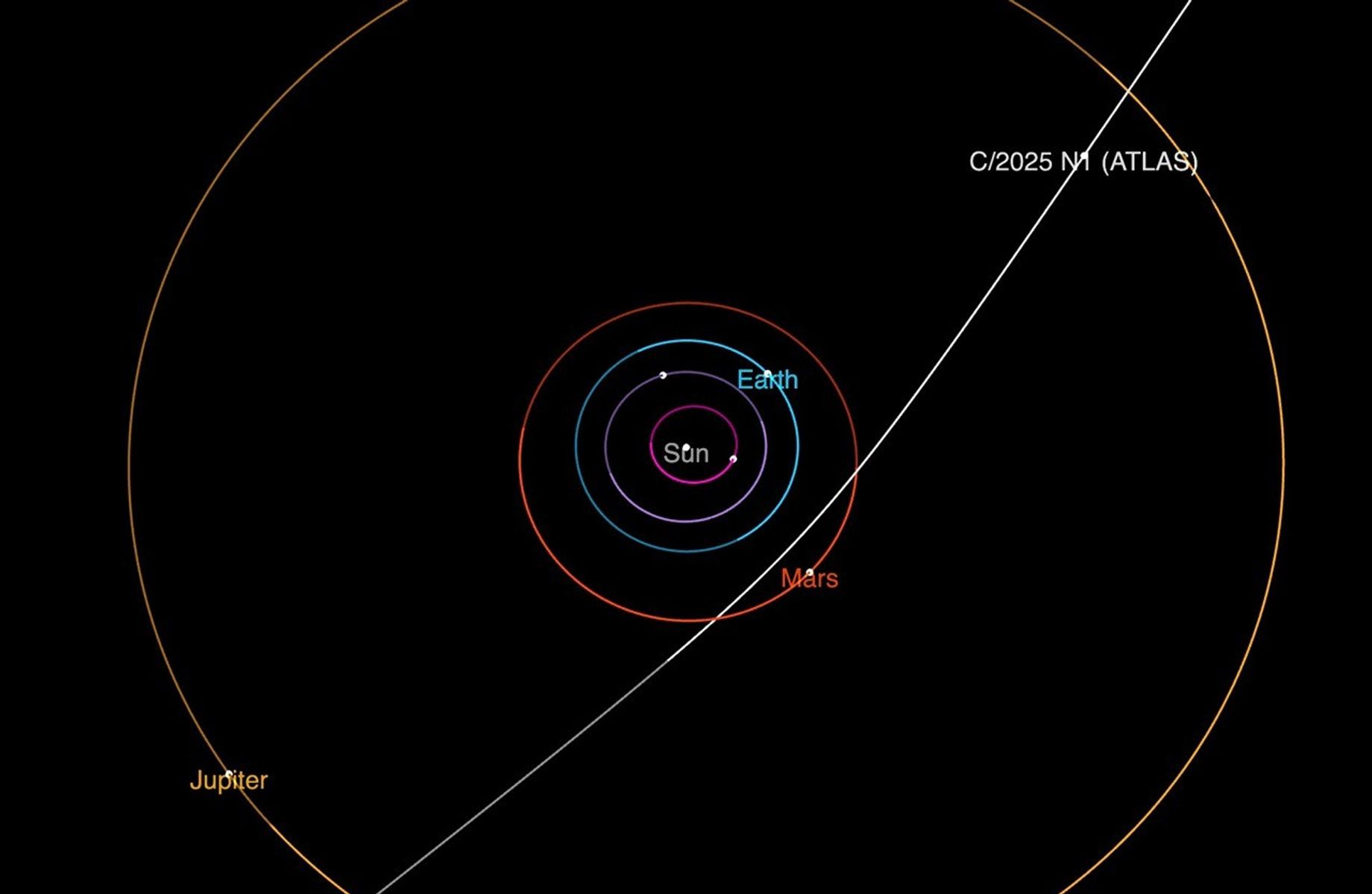
The latest data published by NASA’s Jet Propulsion Laboratory (JPL) confirm the interstellar nature of 3I/ATLAS. Its hyperbolic orbit, with an eccentricity now estimated at 6.1 ± 0.01, clearly indicates that it will not return to our Solar System after its passage. The comet is currently traveling at about 57 km/s relative to the Sun and will reach its perihelion at 1.36 astronomical units, roughly the average distance between the Sun and Mars.
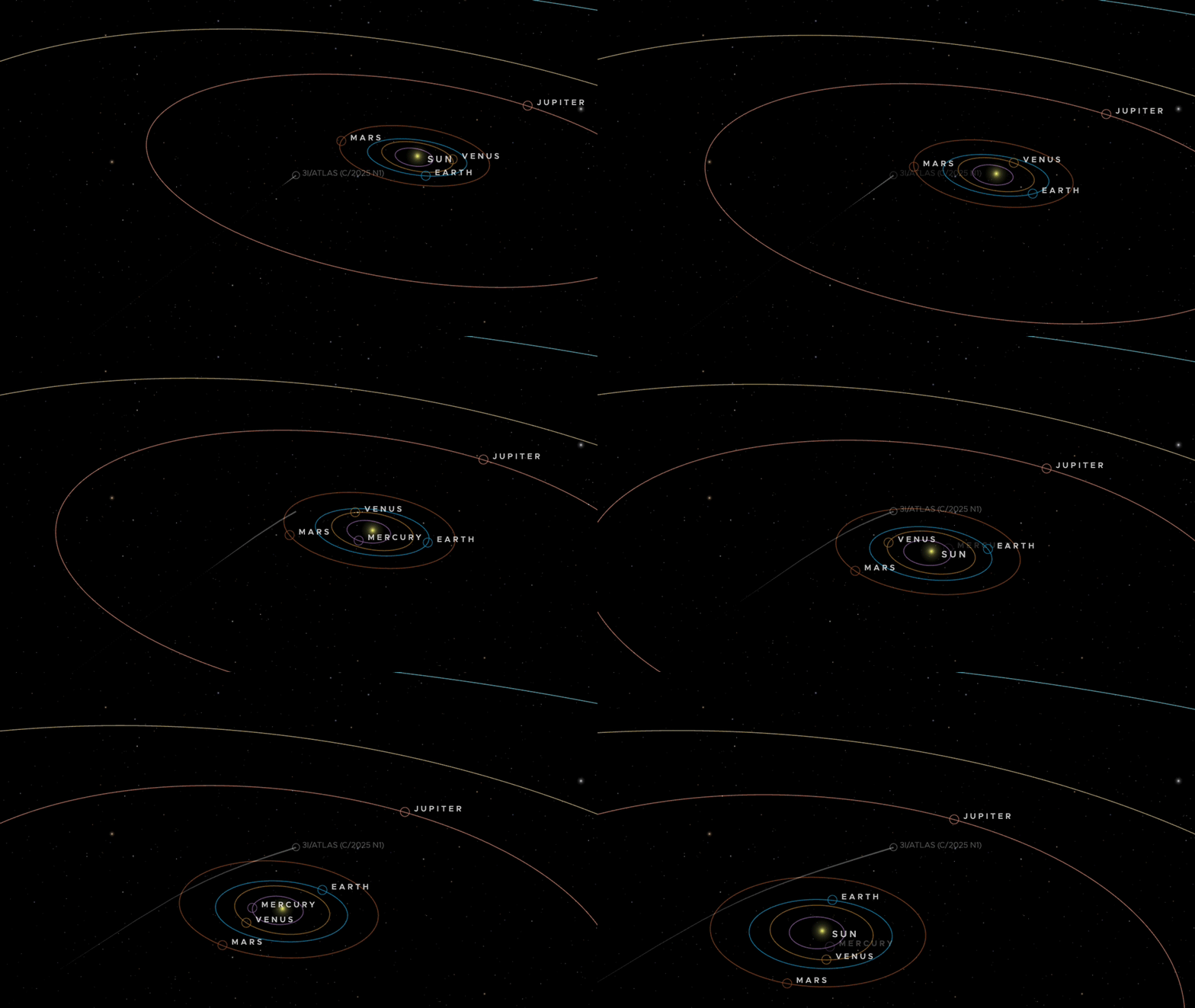
Contrary to recent speculation, no deviation from its trajectory has been detected. Radar and optical measurements confirm that the comet continues on its course without any significant change in direction and will not come closer than 1.8 AU from Earth.
Increasingly Active Cometary Behavior
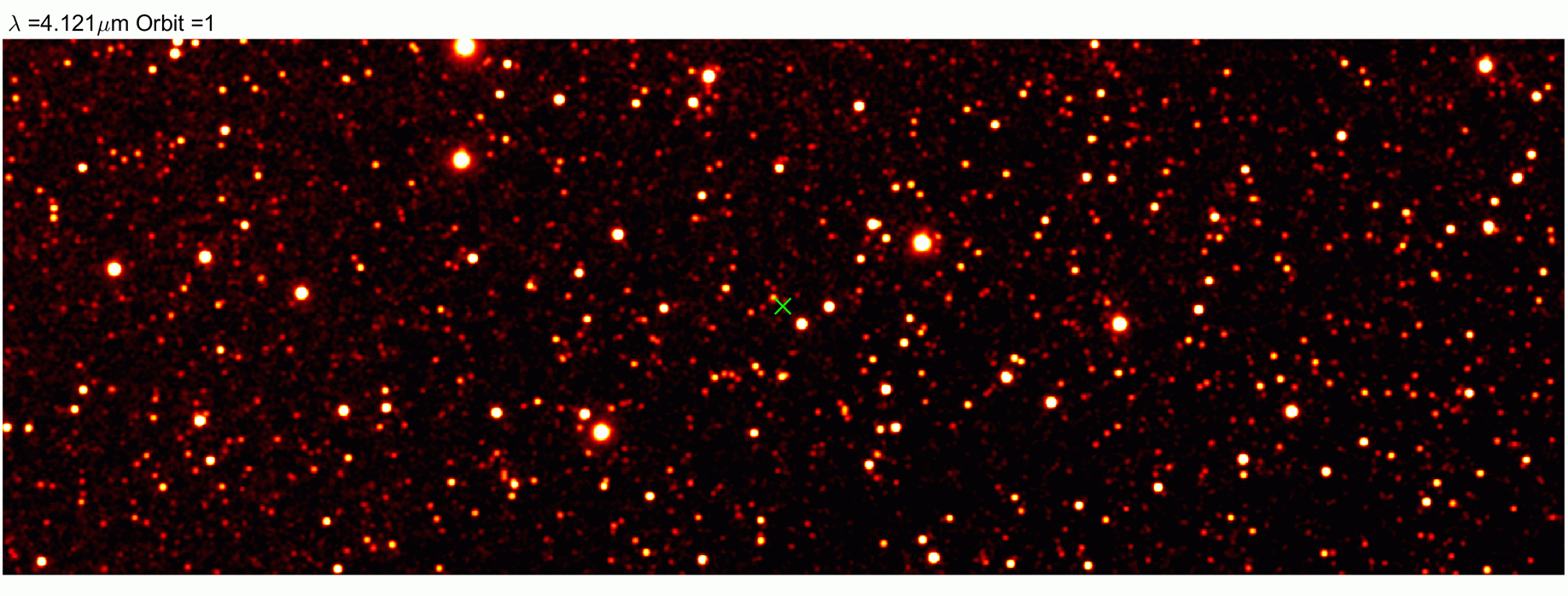
As 3I/ATLAS draws nearer to the Sun, its activity is intensifying. The newly operational NASA SPHEREx space telescope has detected strong emissions of carbon dioxide (CO₂) and cyanogen (CN) — two gases commonly observed in “classical” comets. Infrared spectra captured by SPHEREx suggest that the comet’s surface still contains volatile ices capable of sublimating despite billions of years of exposure to interstellar radiation.
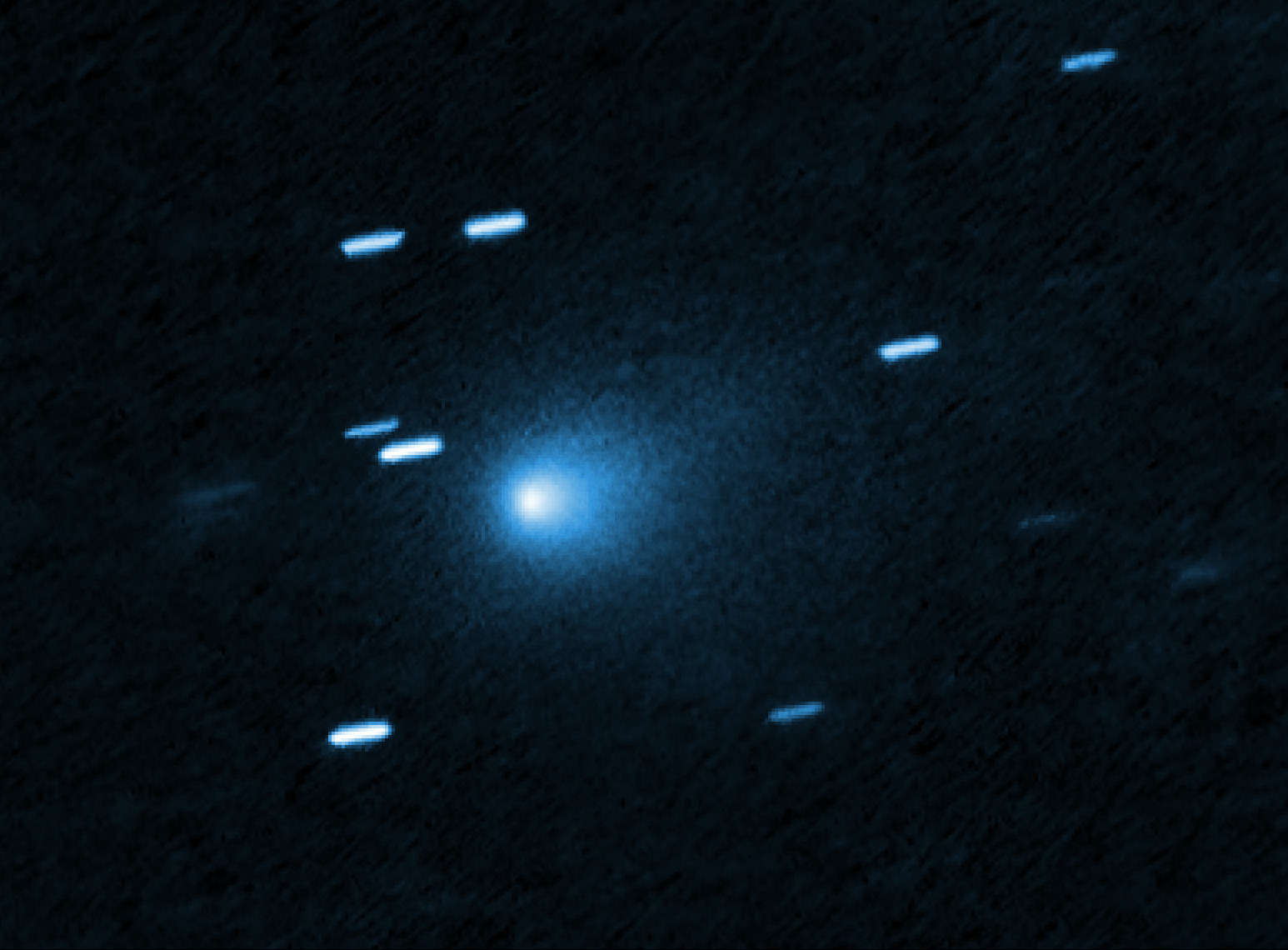
Observations from the Hubble Space Telescope have helped estimate the size of 3I/ATLAS’s solid nucleus. Based on NASA’s photometric data, the maximum diameter is around 5.6 kilometers, though the actual size could be much smaller — down to about 300 meters — depending on the assumed surface reflectivity (albedo).
Addressing “Alien Spacecraft” Rumors
I didn’t think I’d have to write such a paragraph about this visitor, but clarification is needed. Several media outlets have echoed claims of “unusual behavior,” even comparing 3I/ATLAS to ʻOumuamua, discovered in 2017. The excitement grew after astrophysicist Avi Loeb published a paper briefly — and purely speculatively — considering a possible artificial origin if certain non-gravitational accelerations were confirmed.
However, the currently available data do not support any of these extraordinary hypotheses. NASA, ESA, and multiple independent observatories have officially confirmed that 3I/ATLAS is a natural object, whose dynamics and composition are perfectly consistent with those of an interstellar comet. No abnormal radio emissions or unexplained accelerations have been detected.
A Unique Witness to the Interstellar Medium
Researchers now regard 3I/ATLAS as the first interstellar comet observed with such a high level of detail. Its chemical composition—dominated by CO₂ and carbon-rich dust—suggests that it originated from a planetary system formed in an environment abundant in volatile ices. Ongoing comparisons with 2I/Borisov will help scientists determine how the chemistry of the interstellar medium influences comet and planet formation.
Beyond speculation, 3I/ATLAS represents a remarkable scientific opportunity: to observe an unaltered fragment of another star system, carrying clues about the diversity of worlds that populate our galaxy.
Source
Find the latest updates on NASA’s website here.
Article published on July 4, 2025
3I/ATLAS: An Interstellar Comet Passes Through Our Solar System
Interstellar objects—those originating from beyond our Solar System—have captivated astronomers and the public alike since the first detection of ʻOumuamua in 2017, followed by comet 2I/Borisov in 2019. Today, a third such visitor has been confirmed: the interstellar comet 3I/ATLAS (C/2025 N1) is currently traveling through our cosmic neighborhood, offering a rare opportunity to deepen our understanding of the universe beyond our Sun.
Recent Discovery and Rapid Confirmation
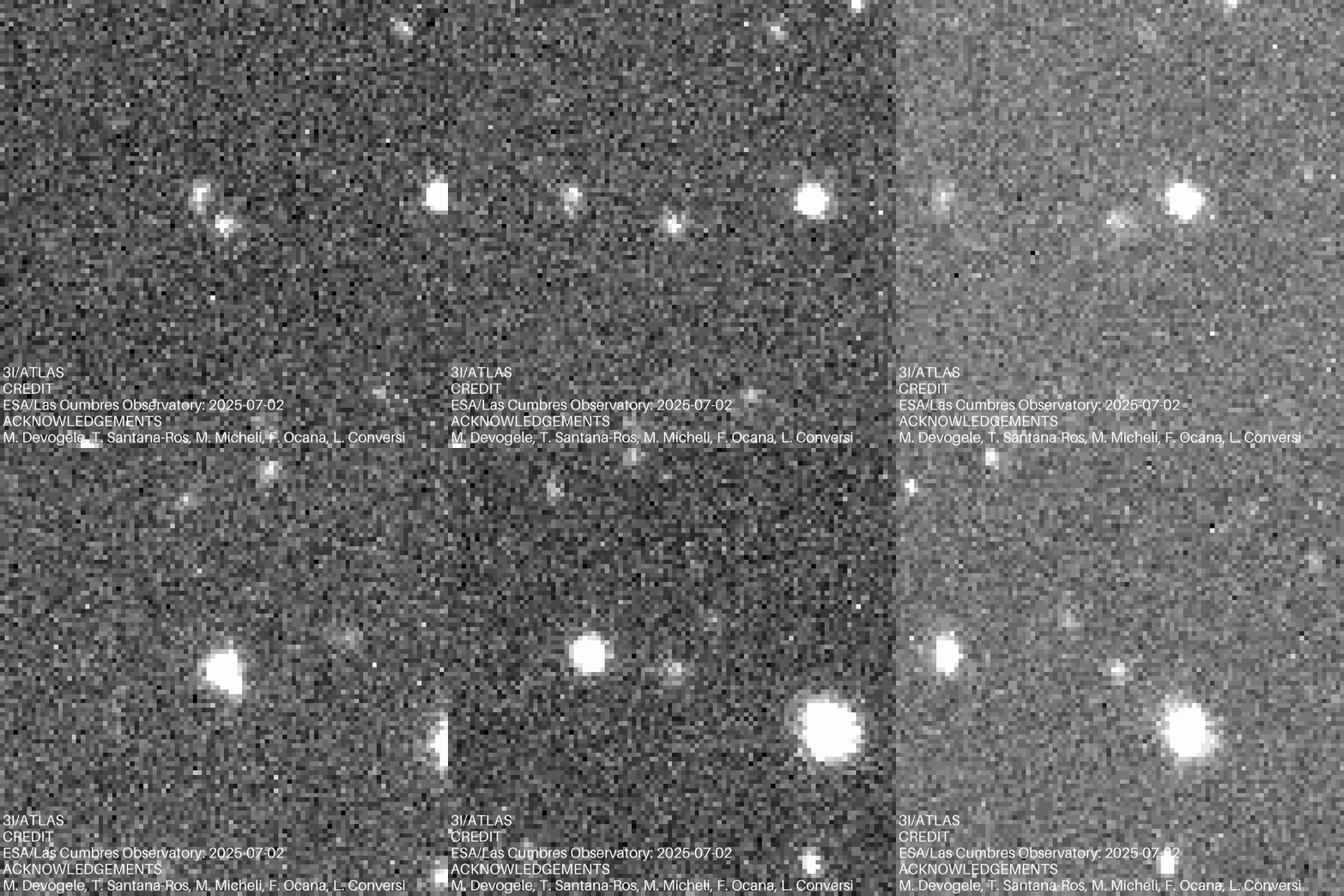
Comet 3I/ATLAS was discovered on July 1, 2025, by the ATLAS telescope network based in Río Hurtado, Chile. Its highly hyperbolic orbit—with an eccentricity close to 6—quickly confirmed its origin outside our Solar System. By analyzing archival images, astronomers were able to trace its path back to June 14, reinforcing the certainty that this object is indeed a celestial body from another star system.
Fascinating Characteristics of 3I/ATLAS
This interstellar comet stands out with an extraordinary velocity of about 60 km/s, surpassing the speeds recorded by its predecessors. Its active nucleus is estimated to measure between a few kilometers and up to twenty kilometers in diameter. Unlike ʻOumuamua, 3I/ATLAS displays a visible coma (or « hair ») and a small tail—typical cometary features—though its observed activity remains moderate.
ESA Takes the Lead
Upon the detection of 3I/ATLAS, the European Space Agency’s Planetary Defence Office swiftly activated its automated monitoring systems. Through rapid analysis and archival research (so-called « precovery »), ESA confirmed the comet’s interstellar origin with high precision and ruled out any threat to Earth.
Origin and Trajectory
According to initial analyses, 3I/ATLAS likely originates from the distant regions of our galaxy, probably coming from the direction of the constellation Sagittarius. Currently located about 4.5 AU (approximately 670 million kilometers) from the Sun, it is expected to reach its closest point to the Sun—known as perihelion—between October 29 and 30, 2025, at a distance of around 1.38 AU. At no point will it approach closer than 1.6 AU (about 240 million kilometers) from Earth, ensuring that it poses no threat to our planet.
An Exceptional Scientific Opportunity
The arrival of 3I/ATLAS is currently mobilizing international teams of astronomers. NASA, the European Space Agency (ESA), the Gran Telescopio Canarias (GTC), and the Zwicky Transient Facility (ZTF), among others, are conducting extensive observations. This unprecedented effort aims to better understand the chemical composition, physical characteristics, and precise origin of this object from another star. Comparing its properties with those of 2I/Borisov and ʻOumuamua may yield valuable insights into the formation and evolution of planetary systems across our galaxy.
The discovery of 3I/ATLAS reinforces the idea that interstellar objects may not be as rare as previously thought. This comet offers a unique window into the diversity of extrasolar matter, helping us better understand not only the origin of our own Solar System but also the astonishing variety of potential worlds scattered throughout our galaxy. As we eagerly await its perihelion passage at the end of October, 3I/ATLAS has already entered the annals of astronomical history, promising to unveil key secrets about the distant worlds that surround us.
Sources
Find a NASA article published on July 1, 2025 [here], and an ESA article published on July 3, 2025 [here].