




Race to the Moon: China vs. Artemis – Who Will Set Foot on the Moon First?
Since the Apollo missions, no human has walked on the Moon. Today, however, two major powers are vying to achieve this historic return: the United States through its Artemis program, and China with its ambitious lunar roadmap. Let’s compare their strategies, progress, strengths, and weaknesses — and ask the question: who will get there first?
The Artemis Program: America’s Return to the Moon
Goals and Ambitions
NASA’s Artemis program aims to establish a sustainable human presence on and around the Moon as a stepping stone toward Mars. It includes an international component (via the Artemis Accords) and relies on strong partnerships with commercial and national players.
A key milestone is to land the first woman and the first astronaut of color on the lunar surface before 2030. The program also includes building the Gateway lunar orbital station as a relay point, along with supporting infrastructure such as habitat modules and refueling systems.
Status in 2025: Progress and Delays
-
Artemis I: Uncrewed mission launched in 2022 — largely successful.
-
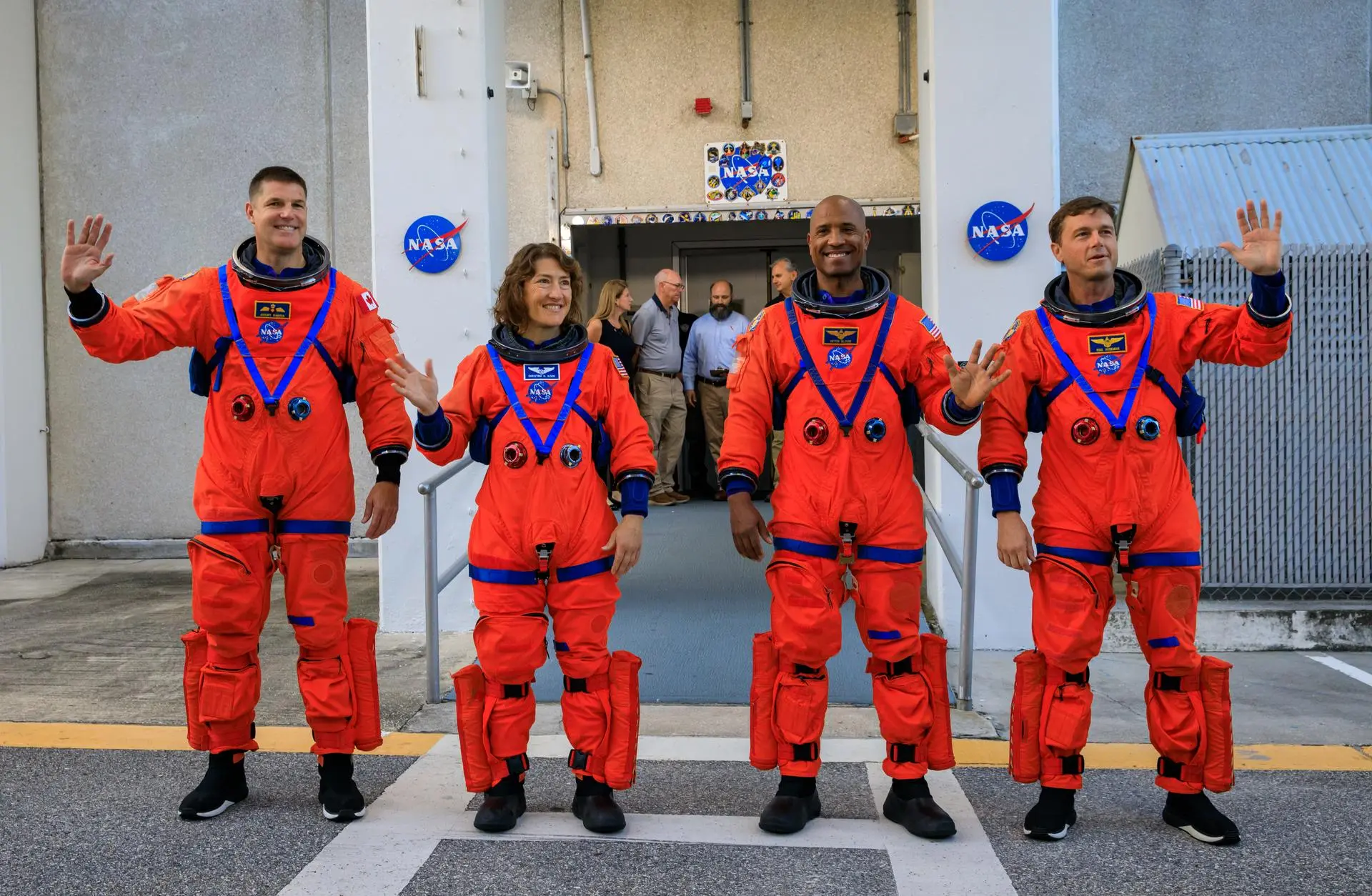
Artemis II: Crewed lunar flyby mission scheduled for April 2026 (potentially advanced to February 2026).
-
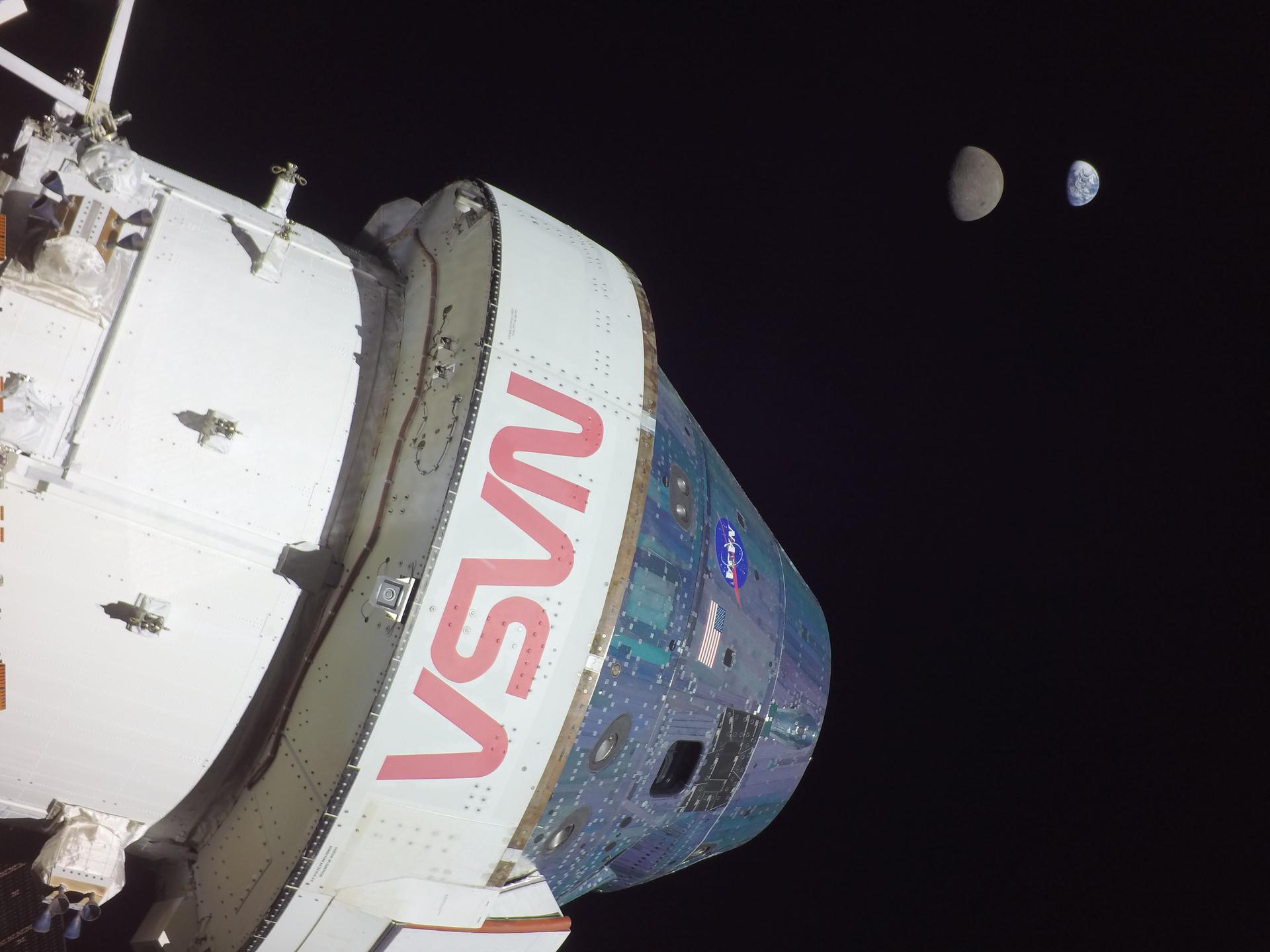
Artemis III: Crewed lunar landing mission currently targeted for mid-2027 at the earliest, pending resolution of technical challenges (heat shield, life-support systems, and the HLS lander).
Several risks threaten this timeline:
-
The program has already experienced multiple delays.
-
The 2026 budget proposes cuts that could significantly alter priorities — including reductions or cancellations of Gateway or the Space Launch System (SLS).
-
Critical dependence on SpaceX’s Starship HLS, which has yet to be proven operational.
In short: despite its ambition, Artemis faces budgetary pressures, technical risks, and political uncertainty.
China’s Lunar Program: Toward Surface Conquest
The Chang’e Program and Human Prospects
Since 2004, China has been running the Chinese Lunar Exploration Program (CLEP), also known as Chang’e. Until now, the missions have been robotic — orbiters, landers, and sample-return vehicles — all marking major successes.
But the next step is clear: by 2030, China plans to land taikonauts on the Moon. To make this possible, it is developing two key vehicles:
-
Mengzhou: a crewed spacecraft for lunar orbit transport.
-
Lanyue: a lunar lander/ascent module designed to carry two astronauts.
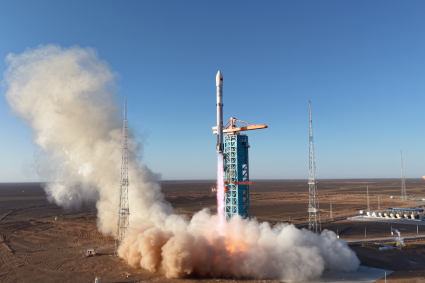
The planned mission scenario involves two Long March 10 launches from Wenchang — one for the lander and one for the crewed vehicle. After rendezvous in lunar orbit, two astronauts will board Lanyue and descend to the surface.
Milestones Already Achieved
-
In August 2025, China successfully completed a touchdown + ascent test of the Lanyue lander, a critical milestone validating its landing and liftoff systems.
-
Ground infrastructure — tracking, telemetry, and landing sites — are under construction or nearly completed.
-
The official government roadmap explicitly states the goal of a crewed lunar landing before 2030.
-
Crew selection will prioritize taikonauts with experience aboard the Chinese Space Station, ensuring operational readiness.
Challenges Ahead
-
Despite progress, further testing is required under simulated lunar conditions (reduced gravity, dust behavior, safety margins).
-
Coordinating two simultaneous launches and an orbital rendezvous around the Moon is a formidable logistical challenge.
-
The Long March 10 must stay on schedule; any delay in the rocket’s readiness could derail the timeline.
-
Ensuring reliability, repeatability, and safety for human missions is far more demanding than for robotic ones.
Comparison: Strengths, Weaknesses, and Key Factors
| Domain | Advantage: Artemis / USA | Advantage: China | Fragility Points |
|---|---|---|---|
| Experience & Resources | NASA’s historic expertise, global partnerships | Rapid growth, centralized coordination | U.S. reliance on private sector, political budget shifts |
| Critical Technology | Starship HLS could be revolutionary if proven | Lanyue successfully completed initial tests in 2025 | HLS unproven, Lanyue yet to demonstrate full reliability |
| Timeline | Target: 2027 (Artemis III) | Target: 2030 (with logistical margins) | Uncertain schedules on both sides |
| Political Stability | Supported but Congress-dependent | Centralized decision-making | U.S. budget and policy volatility |
| Diplomatic Image | International framework via Artemis Accords | Success would boost global prestige | Risk of coalition fragmentation or isolation |
Possible Scenarios: Who Sets Foot First?
Scenario 1: Artemis III Succeeds Before 2028
If NASA overcomes its technical and budget hurdles, an American crew could land on the Moon by 2027 or 2028, reaffirming U.S. leadership and securing a powerful symbolic victory.
But this will require avoiding further delays, validating the Starship HLS (or an alternative such as Blue Origin’s lander), and maintaining stable funding.
Scenario 2: U.S. Delays — China Strikes by 2029
If Artemis suffers setbacks due to technical issues, funding cuts, or political shifts, China could seize the opportunity between 2028 and 2030 to send its crew — becoming the second nation ever to achieve a human lunar landing.
Scenario 3: Near-Simultaneous Landings
Both programs could converge — with Artemis III around 2027 and China’s mission by 2029 — leading to a close, symbolic tie. In that case, the story might be less about competition and more about a dual milestone in human spaceflight.
Broader Stakes: Science, Resources, and Power
The human return to the Moon is not purely symbolic. The south polar region offers access to water ice, helium-3, and other valuable resources that could sustain long-term operations.
Lunar exploration is also a technological race — mastery of landers, reusable systems, power generation, and life-support technologies will shape the path to Mars.
On the diplomatic front, the Artemis Accords aim to establish a legal and cooperative framework for lunar exploration, but China and Russia are not signatories, fueling a rivalry between competing space models.
Yet, the future may not be purely competitive: collaboration could emerge once the first milestones are achieved.
The race to set foot on the Moon again is an audacious gamble. While the United States holds the edge in experience, technology, and partnerships, China is advancing with impressive precision and determination. The timelines are tight, the risks high. But beyond the question of who lands first, the real goal lies further ahead: to stay, to build sustainable bases, and to prepare humanity’s next giant leap — toward Mars.
Source:
Follow the progress of NASA’s Artemis program here on the official NASA website.