



What Does the Government Shutdown Mean for NASA?
What Does the Government Shutdown Mean for NASA? In the United States, the specter of a government shutdown once again looms over federal institutions. When Congress fails to pass a budget on time, large parts of the government grind to a halt, leaving thousands of federal employees in limbo.
But what happens to America’s space ambitions when Washington goes dark? What becomes of NASA, the Artemis program, or the International Space Station (ISS) when the government shuts down?
A Partial Shutdown, Not a Total Blackout
The shutdown doesn’t completely close NASA’s doors. The agency follows a detailed continuity plan that keeps only the most essential operations running:
- Missions vital to the safety of personnel and hardware continue.
- Non-critical work is paused until funding is restored.
In practice, ISS operations remain staffed 24/7 to guarantee astronaut safety, and flagship programs like Artemis keep moving forward — but only in “minimum service mode.”
🟢 Still Operating: ISS, astronaut safety, telemetry, and flight operations.
🔴 On Hold: Ground research, training, technical development, public communications, and data analysis.
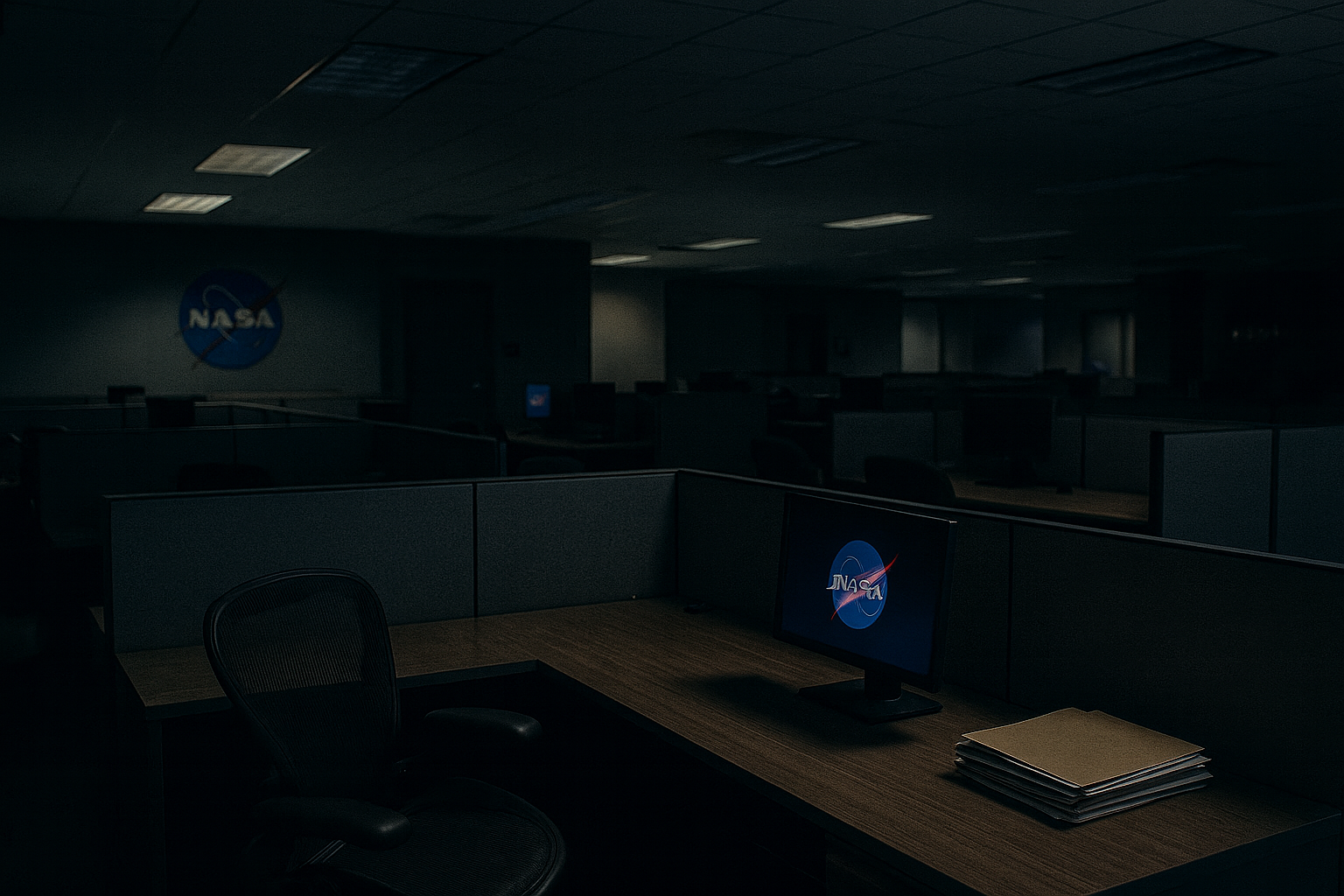
NASA: An Agency on Pause
NASA employs roughly 17,000 people. During the last major shutdown, over 90% were temporarily furloughed.
In 2025, history repeats itself:
- Research centers close,
- Non-urgent projects are frozen,
- Public outreach — including NASA’s social media and press releases — goes silent.
Private contractors and partner labs also feel the shockwave, as federal payments are delayed. The effect cascades across America’s entire space ecosystem — from launch providers to data analysts.
Artemis: Protected, Yet Vulnerable
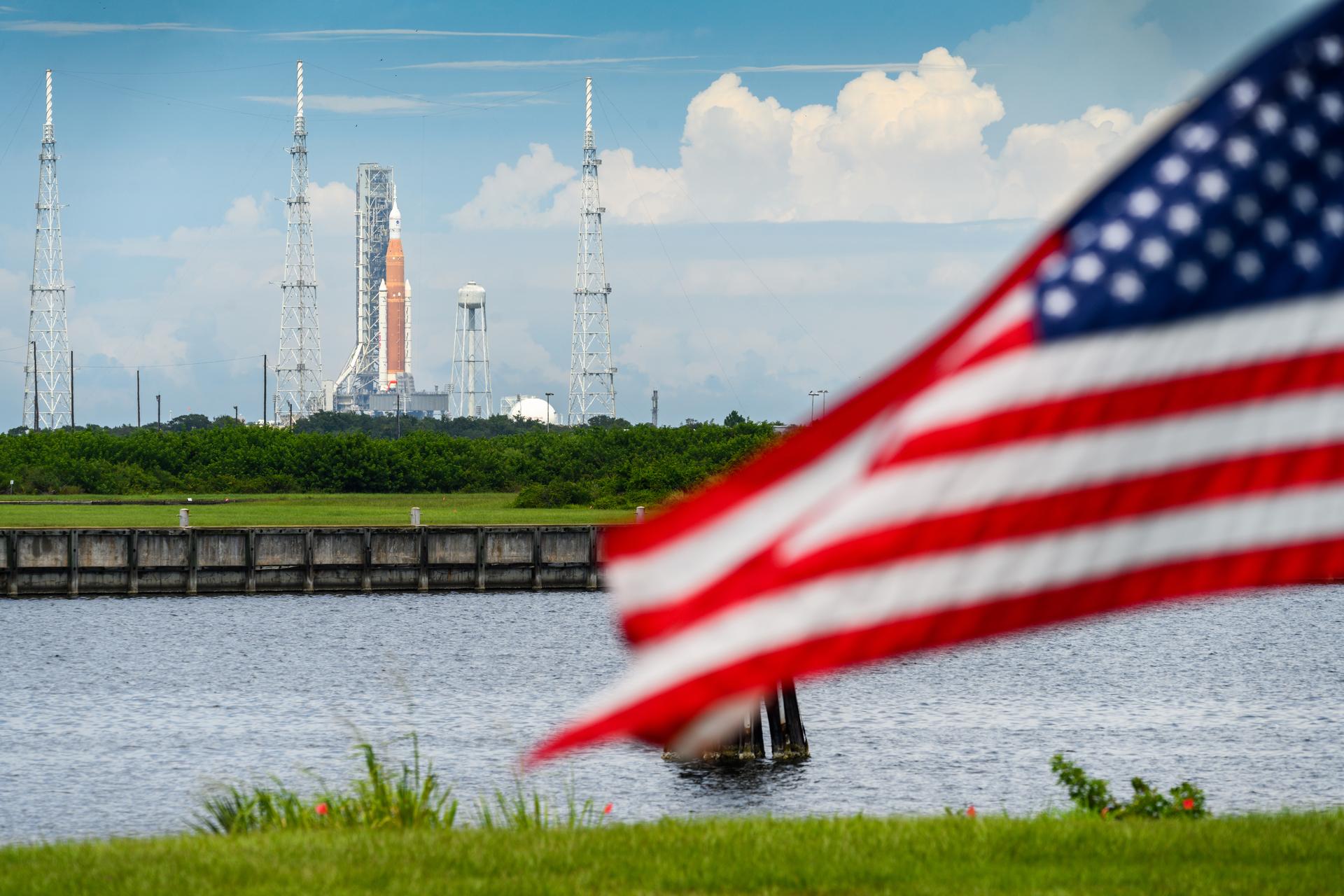
The Artemis program, aimed at returning humans to the Moon, is officially deemed “essential” by the U.S. government. Core teams continue work on the SLS rocket, the Orion capsule, and ground systems. Still, logistical slowdowns pile up.
A prolonged shutdown could push back some technical milestones — even secondary launches linked to Artemis III or support missions.
ISS: Cooperation Above Politics
Orbiting 400 km above the Earth, the International Space Station keeps running, untouched by political gridlock. U.S. ground teams provide minimal support for safety, while Russian, European, and Japanese partners maintain full cooperation.
However, several scientific experiments are paused due to a lack of staff to monitor them from the ground.
The Economic and Scientific Toll
Even a short shutdown can cause:
- Weeks of mission delays,
- Added costs for re-testing and contract extensions,
- And scientific setbacks, as some observations are lost forever.
These disruptions compound an already crowded timeline that includes Artemis, Mars Sample Return, and NISAR.
Impact on International Partners
NASA’s slowdown also drags down its global collaborations with Europe, Japan, and Canada:
- Technical validations with ESA, JAXA, and CSA are delayed.
- Joint missions — including ISS operations and the Gateway lunar station — must adjust schedules.
The European Space Agency (ESA) has already signaled that it’s closely monitoring the situation to adapt its planning accordingly.
A Forced Pause in America’s Space Race
The shutdown doesn’t stop rockets from flying — but it hits the brakes on the vast machinery behind them. Between guaranteed safety, suspended research, and slowed cooperation, every day of inactivity counts. And the longer it lasts, the more fragile the path back to the Moon becomes.
Key Facts: The 2025 NASA Shutdown
📅 Effective Date:
September 29, 2025, at midnight (Washington, D.C.), after Congress failed to pass a budget.
👩🚀 Personnel Affected:
- Total NASA workforce: ~17,000
- 83% furloughed (~14,000 people)
- 17% retained (~3,000 people) for essential safety operations
🟢 Essential Activities (“Excepted”):
- Continuous ISS crew and system monitoring
- Security of key facilities (Deep Space Network, launch centers)
- Critical programs like Artemis and Mars Sample Return to prevent material losses
🔴 Suspended Activities:
- Non-essential R&D (Ames, Goddard, JPL partially closed)
- Public updates and communications
- Training, contracts, and admin procedures
- Scientific data releases awaiting validation
💰 Financial Impact:
- No pay during the shutdown (retroactive pay guaranteed by law)
- Contractor payments paused
- Each week of closure costs tens of millions of dollars in lost time and restart expenses
In Summary
| Area | Status During Shutdown |
|---|---|
| ISS Operations | 🔵 Maintained |
| Artemis Missions | 🟢 Partially Maintained |
| Research & R&D | 🔴 Suspended |
| NASA Communications | 🔴 Suspended |
| Space Safety & Monitoring | 🟢 Maintained |
| Launches & Tests | 🟠 Possibly Delayed |
Sources:
NASA’s official shutdown page and the agency’s continuity plan, dated September 29, 2025 is (here)