

NASA Report on Starliner Reveals Technical Failures and Organizational Problems
NASA has released the long-awaited investigation report into the anomalies that affected Boeing’s CST-100 Starliner during its first crewed flight test, painting a detailed picture of both technical failures and deeper organizational challenges. The document — more than 300 pages long — outlines how a mission initially planned as a short validation flight evolved into a complex operational challenge that ultimately forced NASA to return the spacecraft to Earth without its crew.
More than a technical review, the report represents a critical moment for NASA’s Commercial Crew Program and for Boeing’s future role in human spaceflight.
A mission that changed course after launch
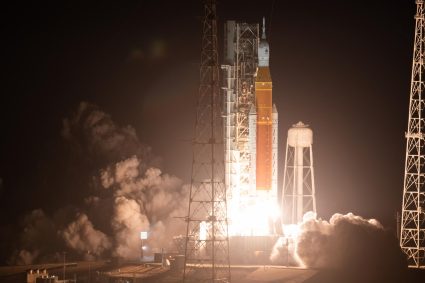
Starliner launched on June 5, 2024, as part of NASA’s Commercial Crew Program, with the goal of certifying the spacecraft for routine astronaut transportation to the International Space Station.
The mission was expected to last little more than a week. Instead, propulsion system anomalies significantly altered the plan. The spacecraft eventually returned uncrewed, while astronauts Butch Wilmore and Suni Williams remained aboard the ISS far longer than expected before returning to Earth aboard a SpaceX Crew Dragon.
What was intended as a short test flight effectively became a long-duration mission — a development that quickly drew public and industry attention.
Four key anomalies identified
NASA investigators identified four major technical issues that shaped the mission.
1. Attitude control thruster shutdowns
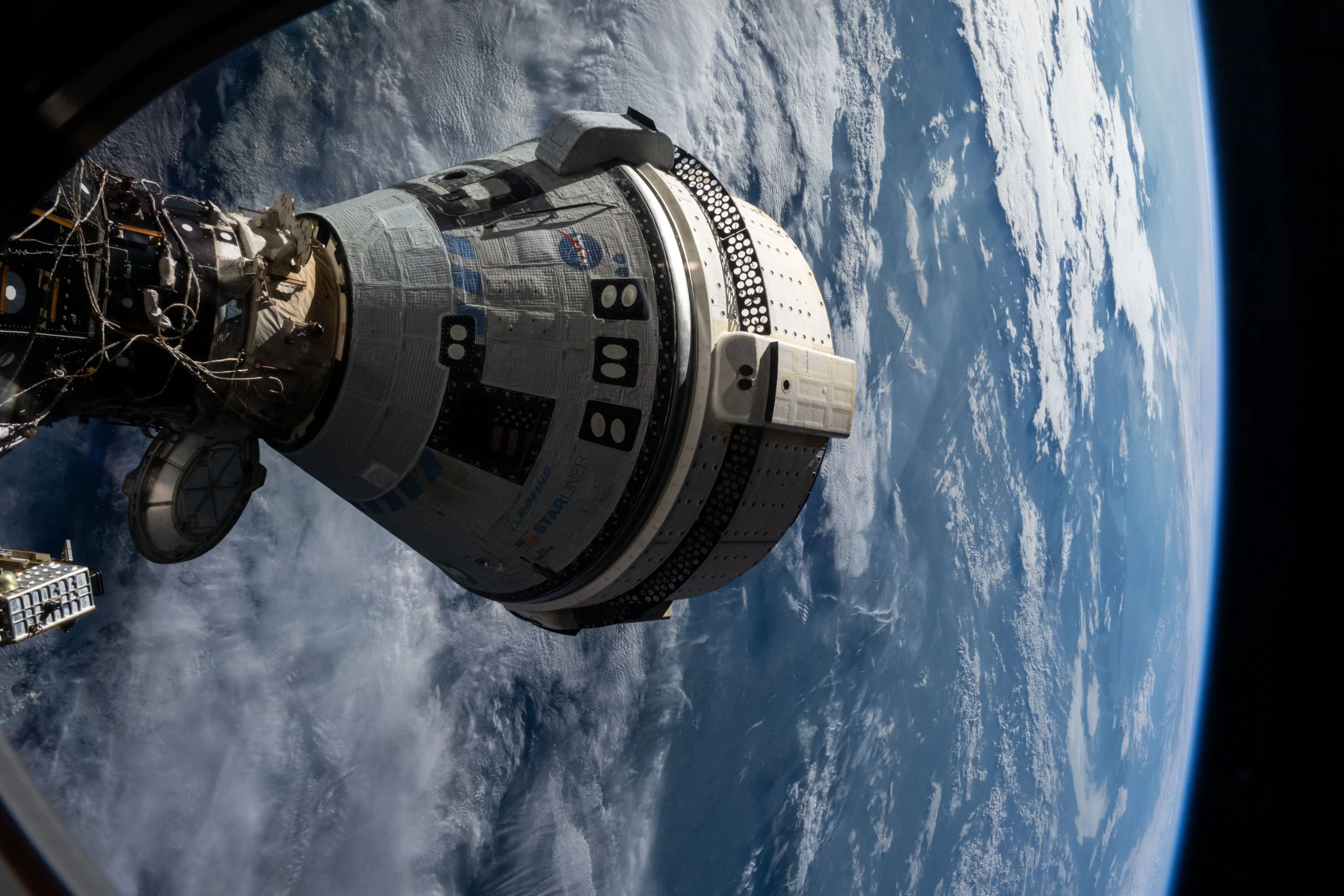
During rendezvous with the ISS, five service module thrusters automatically shut down, briefly resulting in a loss of full vehicle control.
Flight controllers and crew worked in real time to recover four of the thrusters, allowing Starliner to safely dock with the station. The report emphasizes that rapid operational decision-making played a major role in preventing escalation.
2. Critical thruster failure during reentry
During descent, one crew module thruster failed, reducing redundancy margins during a key phase of flight.
Investigators believe internal corrosion, likely caused by chemical reactions involving propellant residues and carbon dioxide, may have prevented proper operation.
3. Helium leaks in the propulsion system
Seven of eight helium manifolds experienced leaks during the mission.
The report points to multiple contributing factors, including material incompatibilities, seal sizing issues, and insufficient engineering tolerances.
4. A design weakness discovered late
NASA also identified a deeper system-level issue: propulsion redundancy for certain critical maneuvers — including deorbit — did not meet expected safety margins.
The problem had existed since early development but was not fully recognized before the crewed flight.
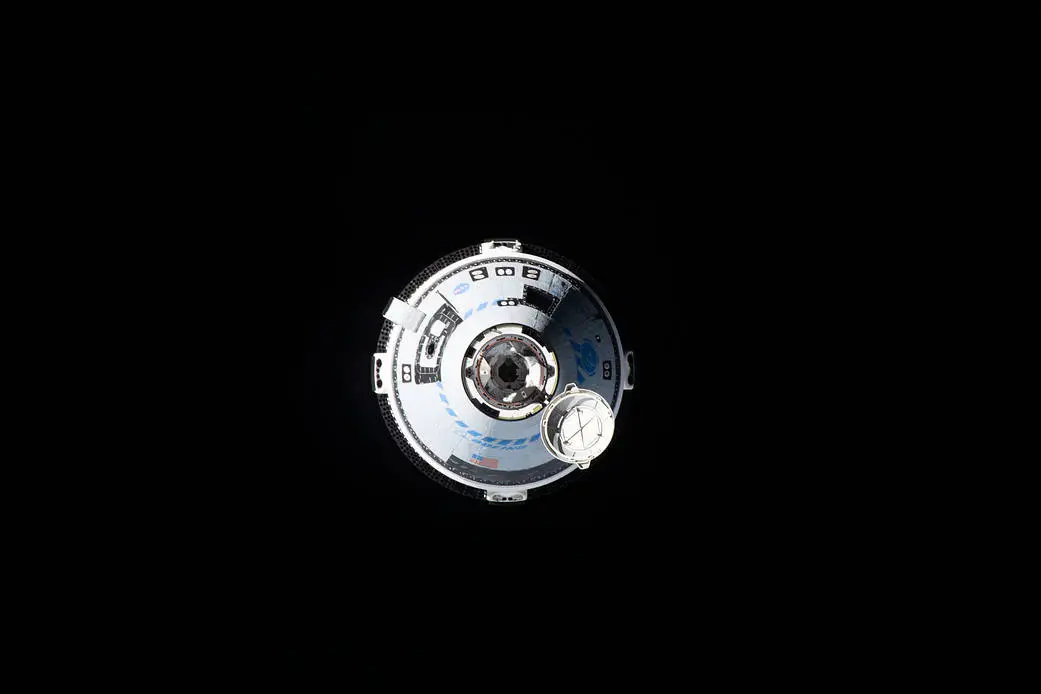
Credit: NASA
Beyond hardware: organizational and cultural factors
While technical issues were central, the report places significant focus on human and organizational dynamics.
Investigators cited:
-
qualification testing that did not fully replicate flight conditions,
-
limited telemetry available for in-flight troubleshooting,
-
acceptance of partially understood anomalies from earlier missions,
-
and sustained schedule pressure.
NASA also described cultural differences between Boeing and agency teams under the commercial partnership model. The desire to maintain two independent U.S. crew transportation providers — SpaceX and Boeing — added complexity to decision-making processes and responsibilities.
A partnership under strain
The investigation highlights broader communication challenges, including:
-
reduced trust between teams,
-
fragmented internal communication,
-
and differing perceptions of operational risk.
According to NASA, the “shared responsibility” framework of the Commercial Crew Program was not always interpreted consistently.
NASA says mission came close to a major incident
Based on NASA internal criteria, the temporary loss of vehicle control during ISS approach could have been categorized as a Type A mishap, the agency’s most serious incident classification.
Although crew safety was never immediately compromised, investigators concluded that the situation could have evolved differently without fast responses from flight teams.
A very different starting point from Crew Dragon
The report also highlights a key contextual factor: Starliner’s crewed flight occurred before the spacecraft had built extensive operational history.
Unlike SpaceX’s Crew Dragon — which flew numerous cargo missions before carrying astronauts — Starliner entered crewed operations with relatively limited flight experience, increasing technical and operational risk.
61 recommendations before the next crewed mission
NASA’s investigation team issued 61 recommendations aimed at improving:
-
system qualification and certification,
-
flight data monitoring,
-
risk management processes,
-
commercial program oversight,
-
and organizational culture.
NASA has made clear that no future crewed Starliner mission will proceed until these issues are fully addressed.
What comes next for Starliner?
The findings represent a pivotal moment for Boeing’s human spaceflight ambitions.
While SpaceX currently handles the majority of ISS crew rotations, Starliner must now demonstrate that it can achieve comparable reliability.
Long-term questions also remain, including the planned retirement of the Atlas V launch vehicle and the availability of critical hardware.
Starliner’s Crew Flight Test is likely to be remembered as a defining chapter in the evolution of commercial human spaceflight. NASA’s investigation shows that the challenges extended well beyond engineering. They also involved how government agencies and private companies collaborate to manage risk and ensure crew safety. The lessons learned will likely influence not only Starliner’s future, but the broader approach to commercial crewed missions in the years ahead.
Key Takeaways
-
Temporary loss of vehicle control during ISS rendezvous
-
Spacecraft returned without crew
-
61 recommendations issued before future crewed flights
-
Commercial partnership model placed under renewed scrutiny
Sources
The investigation report published by NASA is available here, and NASA’s announcement article can be found here.