



New Glenn Explodes on the Launch Pad: A Major Setback for Blue Origin
Blue Origin‘s New Glenn program has suffered its most significant setback to date. On May 28, 2026, a New Glenn rocket assigned to the NG-4 mission was destroyed during a static fire test at Launch Complex 36 (LC-36) in Cape Canaveral, Florida.
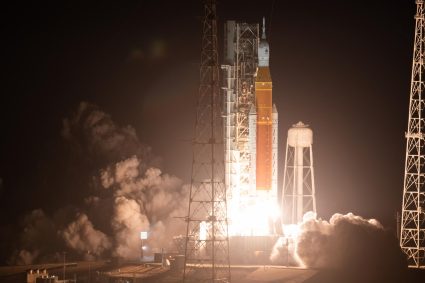
The incident occurred while Blue Origin teams were preparing for a hotfire test, a critical milestone in which the rocket’s engines are ignited while the vehicle remains firmly secured to the launch pad. Moments after the test sequence began, a massive explosion engulfed the rocket, creating a giant fireball visible for miles around.
No Injuries Reported, But the Rocket Was Lost
In a brief statement released after the incident, Blue Origin said it had experienced an “anomaly” during the May 28 test and confirmed that all personnel were safe and accounted for.
While no injuries were reported, the material damage was substantial. The New Glenn vehicle intended for the NG-4 mission was completely destroyed. Early images from the scene also revealed significant damage to parts of the LC-36 launch complex. However, subsequent inspections suggested that several key facilities, including propellant storage systems and support buildings, suffered less damage than initially feared.
Here’s our video of the explosion at Launch Complex 36. It happened about 9 pm ET (0100 UTC) as Blue Origin was beginning a static fire test of its New Glenn rocket.
Watch live views: https://t.co/tm2wZQmAVD pic.twitter.com/PmbgQC6Qmq
— Spaceflight Now (@SpaceflightNow) May 29, 2026
An Important Mission for Blue Origin
The NG-4 mission was expected to support the deployment of satellites connected to Amazon’s growing space ambitions. The flight was also intended to help Blue Origin increase the launch cadence of New Glenn, a heavy-lift rocket often viewed as one of the leading American competitors to SpaceX’s Falcon Heavy.
Standing 98 meters tall and featuring a reusable first stage powered by seven BE-4 engines, New Glenn is among the most ambitious launch vehicles ever developed by Blue Origin.
Blue Origin’s New Glenn just blew up at LC-36 while attempting to Static Fire ahead of NG-4.https://t.co/tANS0dWyIH pic.twitter.com/PztxFoBqIw
— NSF – NASASpaceflight.com (@NASASpaceflight) May 29, 2026
Potential Impact on Artemis and Blue Moon
The explosion comes only days after Blue Origin received additional contracts related to NASA’s future lunar exploration efforts.
New Glenn and its associated systems play a key role in the company’s long-term lunar ambitions, particularly through the Blue Moon lunar lander program. Although NASA has not announced any immediate changes to its schedule, the incident could complicate some of the milestones associated with future Moon missions.
Investigation Underway
At this stage, Blue Origin has not disclosed the cause of the explosion. Engineers and investigators are currently reviewing data collected during the test sequence to determine the exact source of the anomaly.
Attention is expected to focus on the rocket’s propellant systems and the ignition sequence of the BE-4 engines, though no official conclusions have yet been released.
Blue Origin Already Looking Ahead
Despite the spectacular loss of the vehicle, Blue Origin says it intends to resume New Glenn flights before the end of 2026. Company CEO Dave Limp stated that damage to the launch infrastructure appears less severe than initially expected and that recovery efforts are already being planned.
For Blue Origin, the challenge is now twofold: determine what caused the explosion and demonstrate its ability to return New Glenn to flight quickly in an increasingly competitive launch market dominated by SpaceX.
History suggests that such setbacks do not necessarily spell disaster. SpaceX suffered a dramatic Falcon 9 launch pad explosion in 2016 but successfully returned to flight only a few months later. Blue Origin will now be hoping to follow a similar path.
Source
Blue Origin’s official statement regarding the incident is available on the company’s website.