


ESA Discovers Stronger-Than-Expected Winds on Mars
Thanks to nearly twenty years of observations, the European Space Agency’s orbiters Mars Express and ExoMars Trace Gas Orbiter (TGO) have produced the first global map of Martian winds. The study reveals gusts reaching up to 150 km/h, far exceeding previous climate model estimates — a discovery that reshapes our understanding of the Red Planet’s atmosphere.
Observing Martian Winds: A Scientific Challenge
Studying wind on Mars is no easy task. Unlike Earth, Mars has no network of weather stations spread across its surface. Its atmosphere, about 77 times thinner than Earth’s, makes direct detection of air movements extremely difficult.
Until now, researchers relied on sporadic data from surface rovers and on computer simulations of the Martian climate. These methods, however, left major uncertainties about the planet-wide behavior of the winds.
Dust Devils: Natural Tracers of Martian Winds
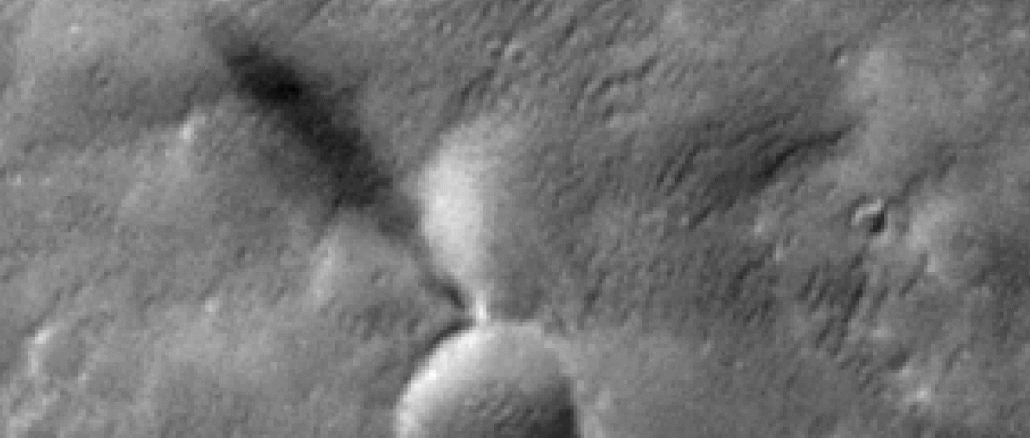
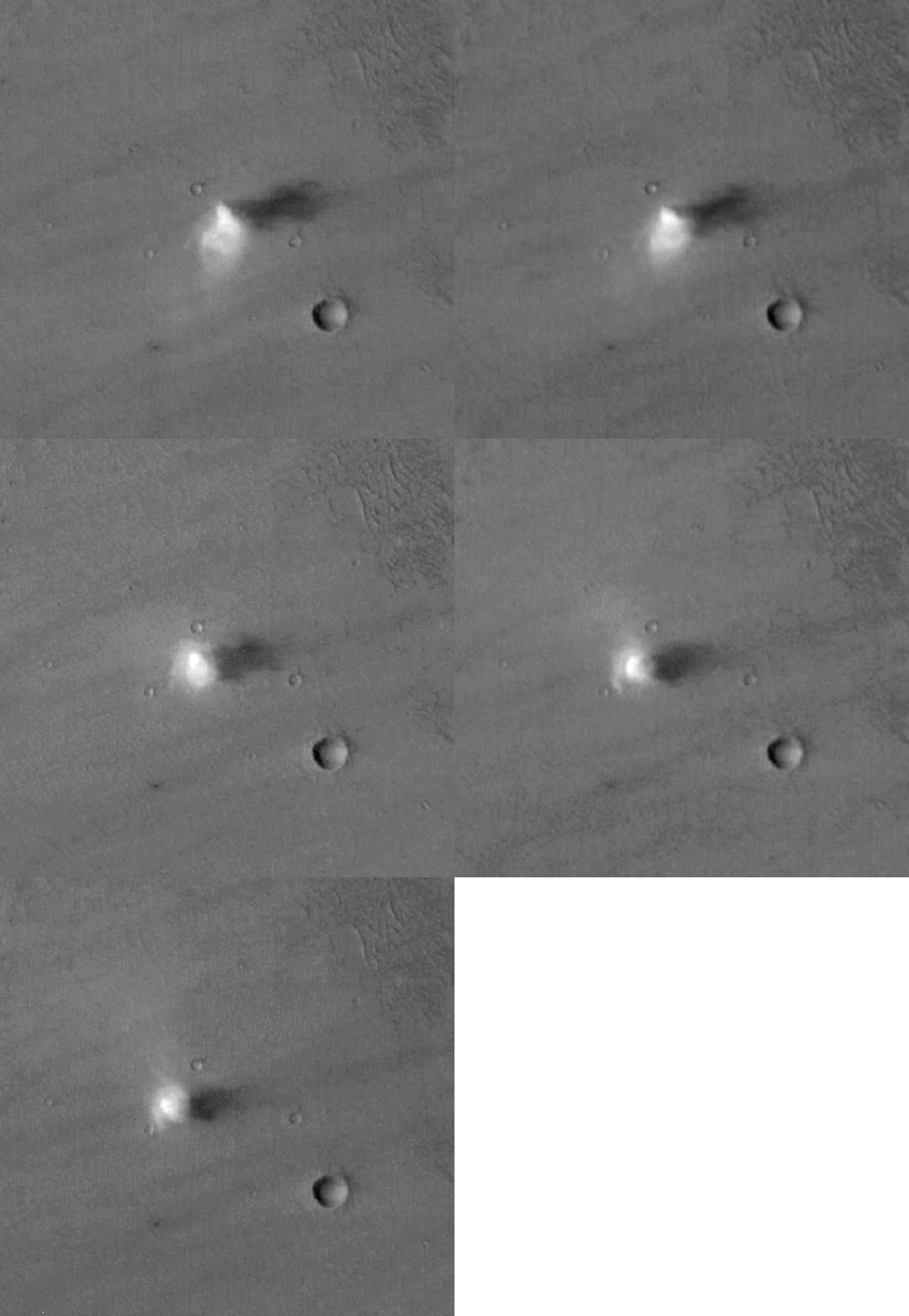
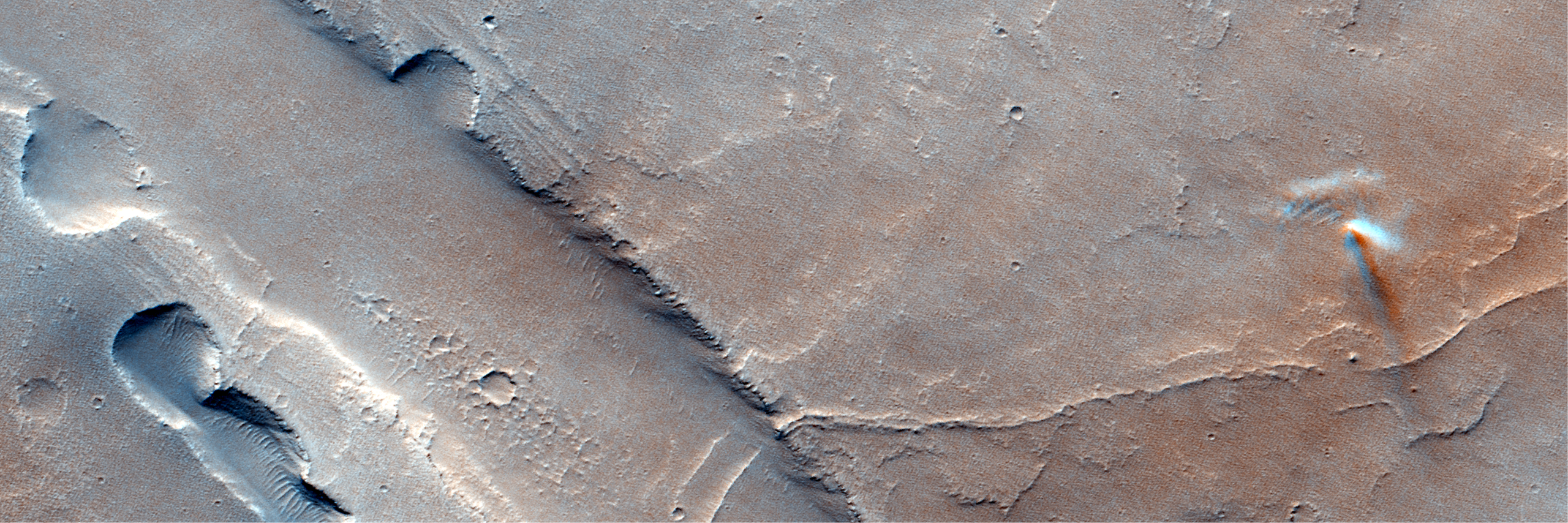
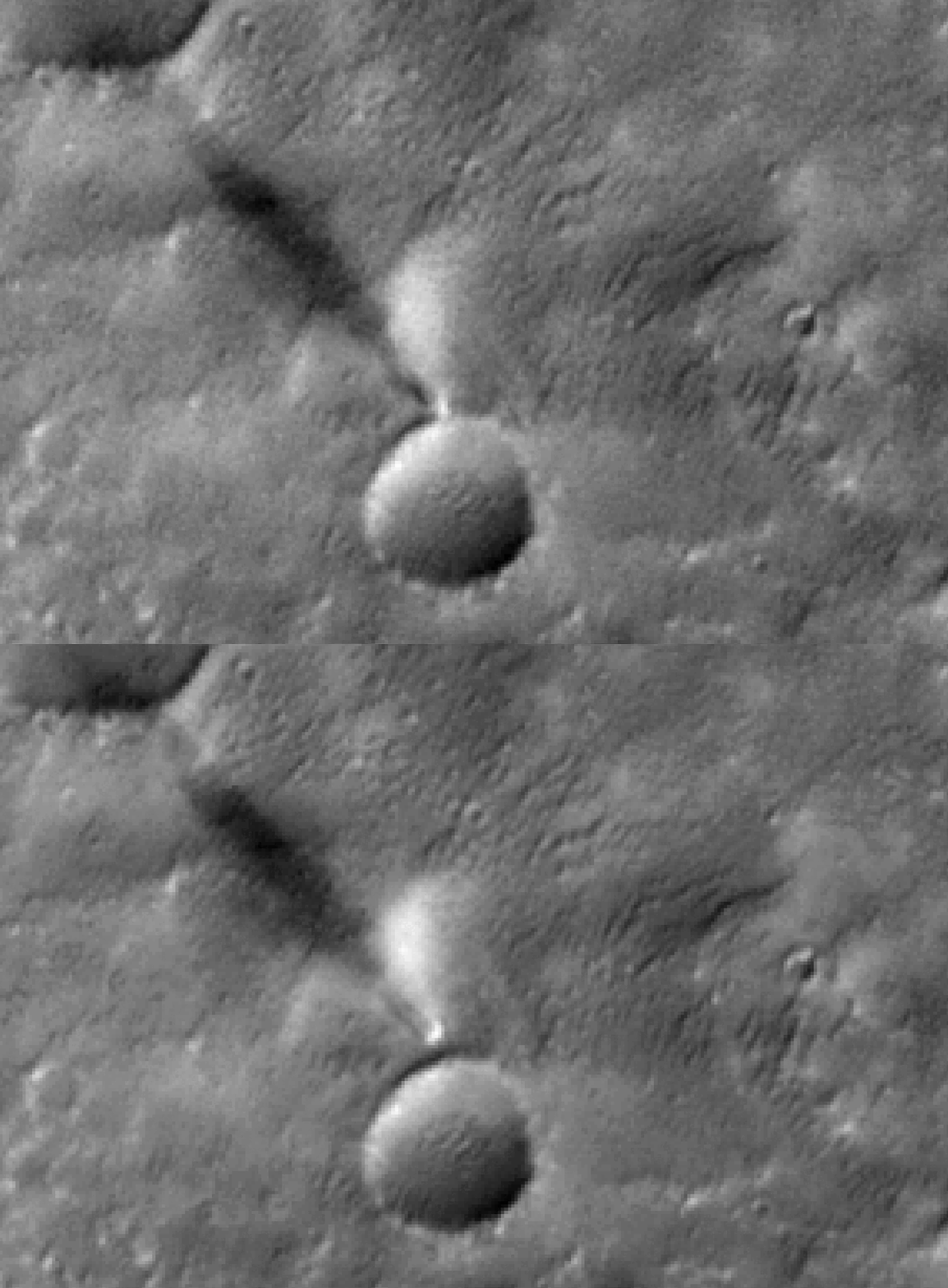
This is where dust devils come in — small whirlwinds similar to miniature tornadoes. They form when the Martian surface, heated by the Sun, warms the surrounding air, causing it to rise and create a visible spiral of dust.
ESA scientists analyzed nearly two decades of imagery from Mars Express and TGO. Using a neural network trained to automatically detect these vortices, they compiled a catalog of over 1,000 dust devils across the Martian globe. For 373 of them, researchers successfully measured both wind speed and direction.
Gusts Reaching 150 km/h
The results are striking. In several regions — particularly Amazonis Planitia, a vast dust-covered plain — wind speeds exceed 44 meters per second (around 158 km/h). These values are much higher than those predicted by Martian atmospheric models.
Dust devils are most common between 11 a.m. and 2 p.m. local time, during the warm seasons of Martian spring and summer, when convection is strongest.
These observations show that Martian winds can be far more energetic than previously thought — capable of lifting and transporting enormous amounts of dust across the atmosphere.
A New Look at the Martian Climate
These findings will help refine Martian weather and climate models.
Dust plays a central role in Mars’s climate — influencing atmospheric temperature, global storm dynamics, and even surface illumination. Understanding how the wind behaves is therefore essential to grasp the full picture of Martian dust circulation and its long-term effects.
The data also have practical implications for space missions. Dust buildup on solar panels is one of the main causes of power loss for rovers. Better knowledge of Martian winds could help anticipate these effects and improve the design of future robotic and human missions.
Mapping the Invisible Winds
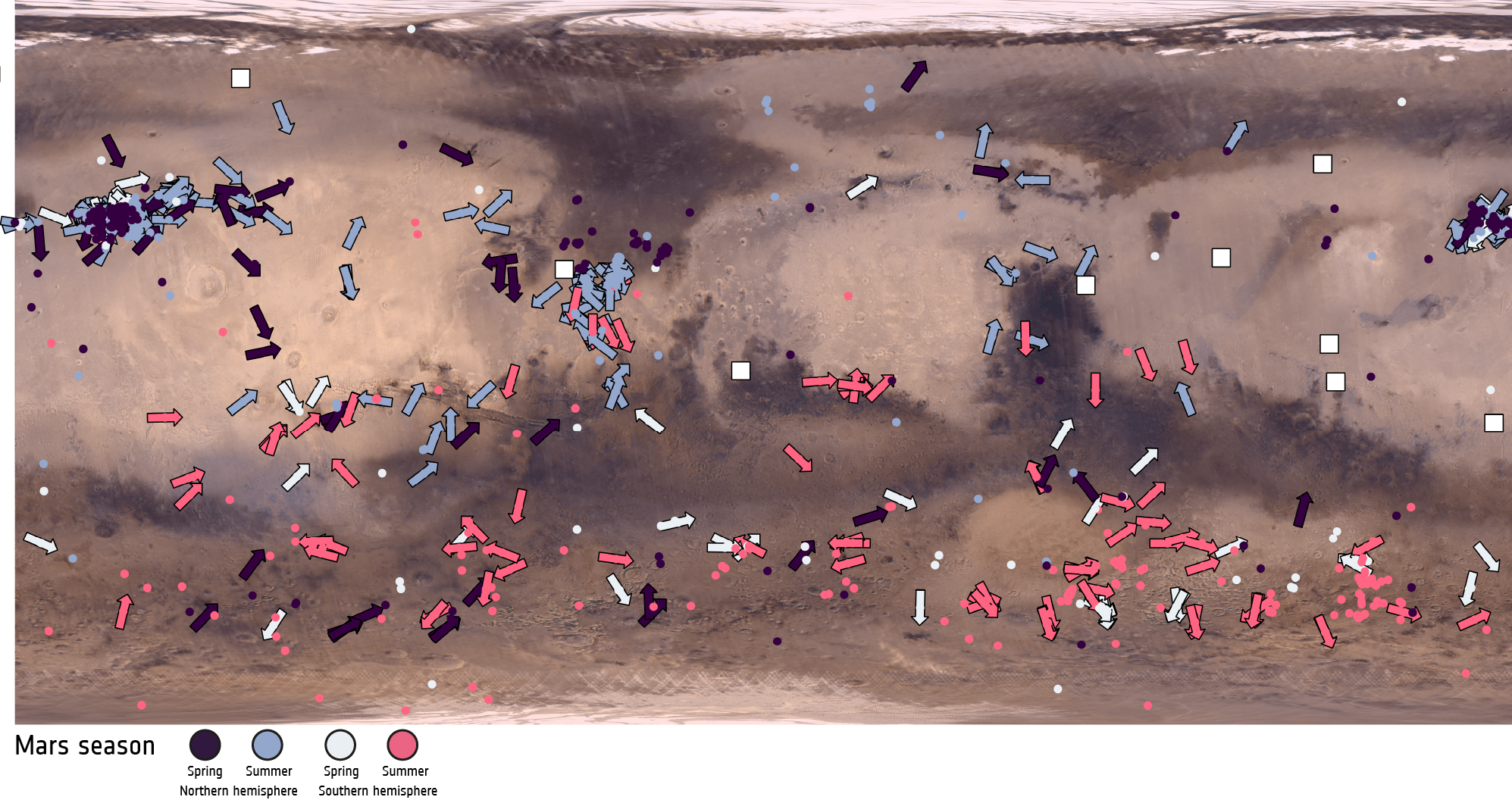
This new map provides the first global cartography of Martian winds based on dust devil observations visible from orbit. The data — drawn from 20 years of Mars Express and ExoMars TGO images — were published in Science Advances.
Each arrow on the map represents a detected dust devil: its orientation indicates wind direction, and its color corresponds to the Martian season
-
Dark purple: Northern spring
-
Light blue: Northern summer
-
White: Southern spring
-
Pink: Southern summer
Larger arrows correspond to faster dust devils — some revealing winds exceeding 150 km/h. The study confirms that Martian winds are stronger and more variable than models suggested. Most dust devils form between 11 a.m. and 2 p.m. local time, when solar heating creates intense updrafts of warm air.
This mapping effort offers an unprecedented tool to refine Martian climate and weather models, understand dust transport, and anticipate conditions for future exploration missions. Credit: ESA/TGO/CaSSIS
Mars Express and TGO: Long-Term Observers
Launched in 2003, Mars Express is one of ESA’s longest-running missions. Its High Resolution Stereo Camera (HRSC) continues to deliver detailed images of the Martian surface. The Trace Gas Orbiter, part of the ExoMars program and in orbit since 2016, complements these observations by tracking fine dust particles and gases in the atmosphere.
Together, the two orbiters provide an unprecedented view of Mars’s atmospheric dynamics — the result of two decades of continuous monitoring.
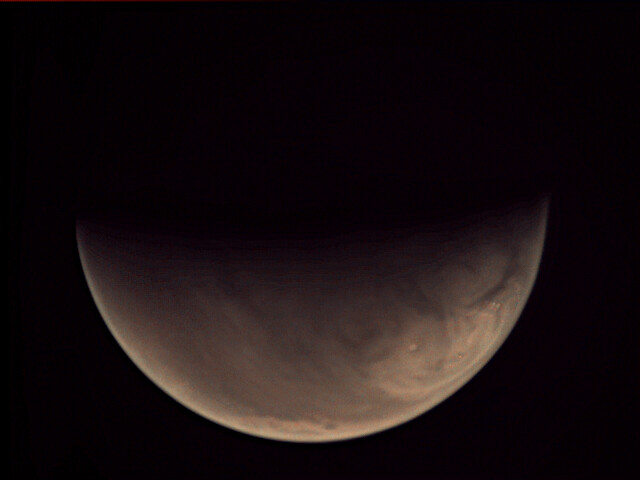
Mars Express: Over 110,000 images of Mars on Flickr

A More Dynamic Red Planet
Beyond the numbers, this discovery transforms our perception of Mars. Far from being a silent desert, the Red Planet is a dynamic world, swept by powerful winds and fleeting vortices. Researchers hope to expand their catalog as new images arrive, paving the way for a genuine Martian meteorology.
“Mars is not a frozen world. Each dust devil is a signature of a living atmosphere that we are only beginning to understand,”
summarizes an ESA researcher.

The discovery of these powerful winds highlights the strength of orbital observation tools and the value of long-term mission collaboration. By revealing the invisible face of wind on Mars, ESA has provided a new key to understanding the planet’s climatic and geological evolution — and has helped prepare the ground for future explorers who may one day face these Martian gusts firsthand.
Source:
ESA article published on October 8, 2025 is [here]