



Presentation of Lanyue: China’s Crewed Lunar Lander
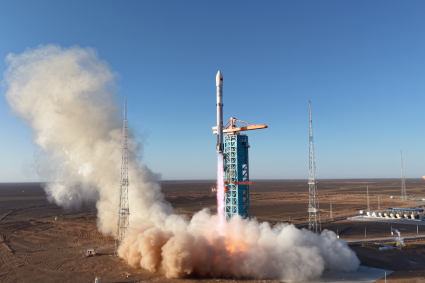
After unveiling the Long March 10 rocket and the Mengzhou spacecraft, China is developing the third cornerstone of its crewed lunar program: Lanyue, the first lander designed to place taikonauts on the surface of the Moon by 2030.
Lanyue — a symbolic name for a historic ambition
On February 24, 2024, the China Manned Space Agency (CMSA) officially revealed the names of its two new lunar vehicles: Mengzhou (梦舟, “Dream Vessel”) for the crewed capsule, and Lanyue (揽月, “Embrace the Moon”) for the lunar lander. Both are poetic names with deep strategic meaning, representing the final stage of China’s long-term human spaceflight roadmap, initiated more than two decades ago.
With Lanyue, China is entering the last phase of its lunar exploration plan: achieving its first crewed lunar landing before 2030. The spacecraft is central to the Crewed Lunar Exploration Program (CELP), which will pave the way for a future International Lunar Research Station (ILRS), a joint project with Russia and other international partners.

A two-person lander for lunar exploration
Lanyue is a two-person spacecraft, designed to carry taikonauts from lunar orbit to the surface and back to the Mengzhou capsule. The lunar stay will range from 48 hours to six days, depending on mission objectives.
It consists of two main sections:
-
The descent module, equipped with a main engine and four foldable landing legs, responsible for braking and a soft landing.
-
The ascent module, a pressurized compartment housing the crew, life-support and navigation systems, and propulsion for the return to orbit.
The complete system weighs about 26 tonnes, roughly twice the mass of the Apollo Lunar Module (LM). Several propulsion options are under evaluation, including the YF-36 engine (used in Chang’e missions) and newer designs still under test. Two large solar arrays power the ascent module’s systems.
Modular architecture for safety and flexibility
China’s approach relies on two independent launches:
-
A Long March 10 rocket launches the Mengzhou capsule and its crew into lunar orbit.
-
A second Long March 10 sends the Lanyue lander and its propulsion module to the same orbit.

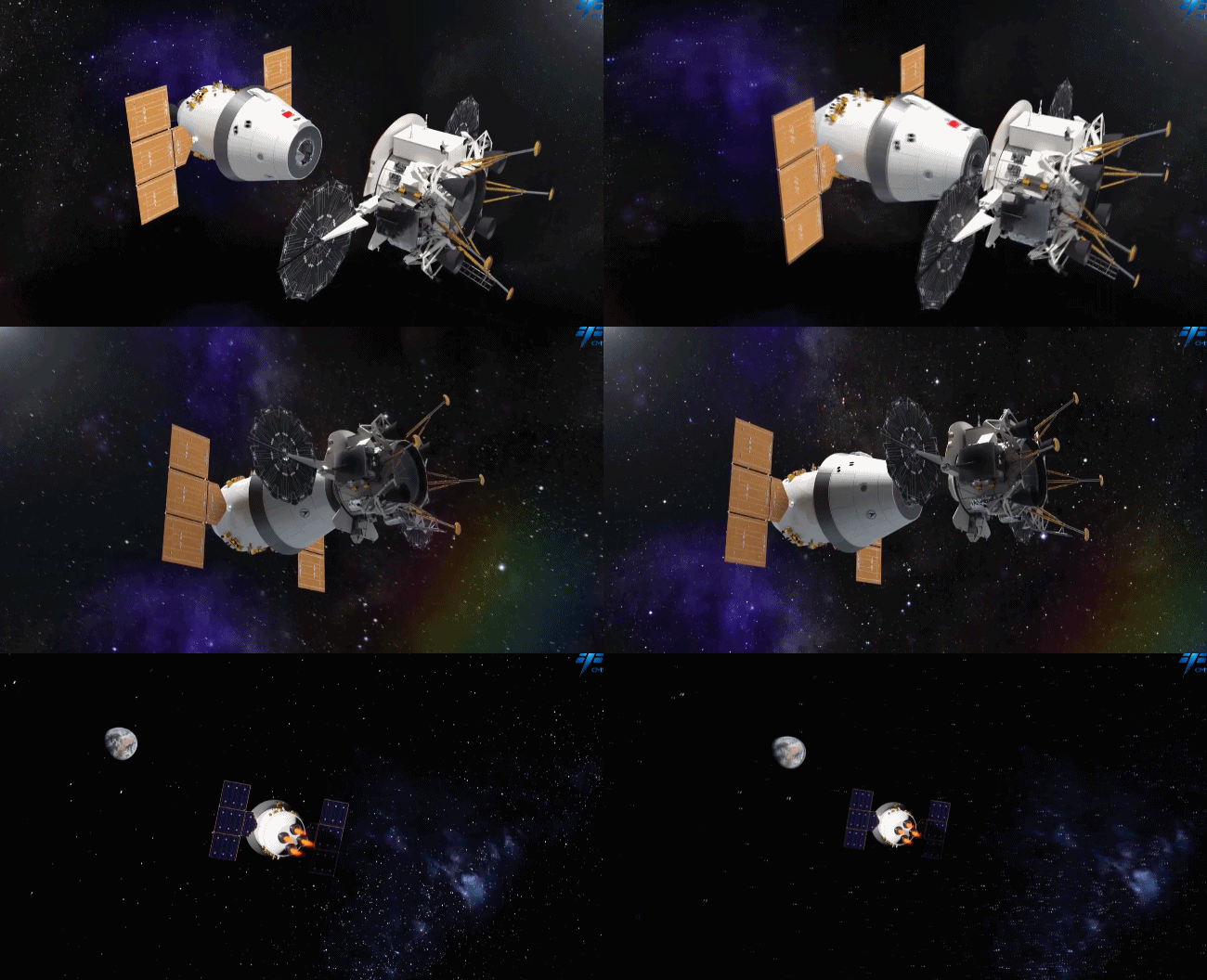
The two vehicles rendezvous in orbit for automated docking, after which the taikonauts transfer to Lanyue for descent. This dual-launch strategy reduces risk and increases flexibility: if one vehicle experiences a problem, the mission can be safely aborted.
The ascent module supports several days of autonomy, with full life-support systems: recycled oxygen, thermal control, and water and food storage. Communications will rely on the Queqiao-2 relay constellation, launched in 2024, ensuring continuous links between Earth, the lunar farside, and the polar regions.

Promising technical tests
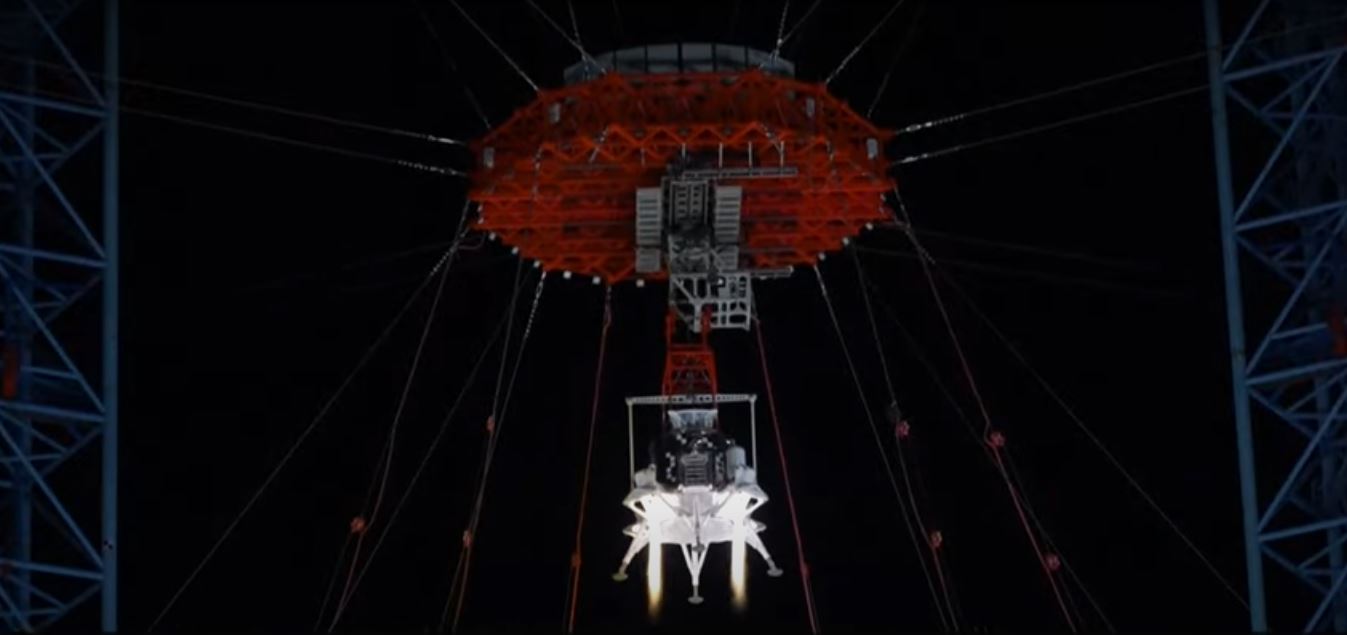
Since 2024, multiple mock-ups and prototypes of Lanyue have been tested at the China Academy of Space Technology (CAST).
The tests include:
-
Structural separation and landing leg deployment,
-
Vibration and thermal stress trials simulating launch conditions,
-
Validation of autonomous navigation algorithms for uneven terrain,
-
Propulsion tests with precise thrust control.
These steps mirror the rigorous engineering standards of the Chang’e missions, aiming for a precision automated descent capable of real-time obstacle avoidance using laser and radar sensors.
According to CMSA, a robotic prototype of Lanyue will fly before any crewed mission to validate the full descent and ascent profile — potentially as early as 2027–2028.
A clear timeline
If the schedule remains on track:
-
2027–2028 → Robotic verification flight of Lanyue
-
2028–2029 → Uncrewed joint Mengzhou–Lanyue mission
-
2030 → First Chinese crewed lunar landing
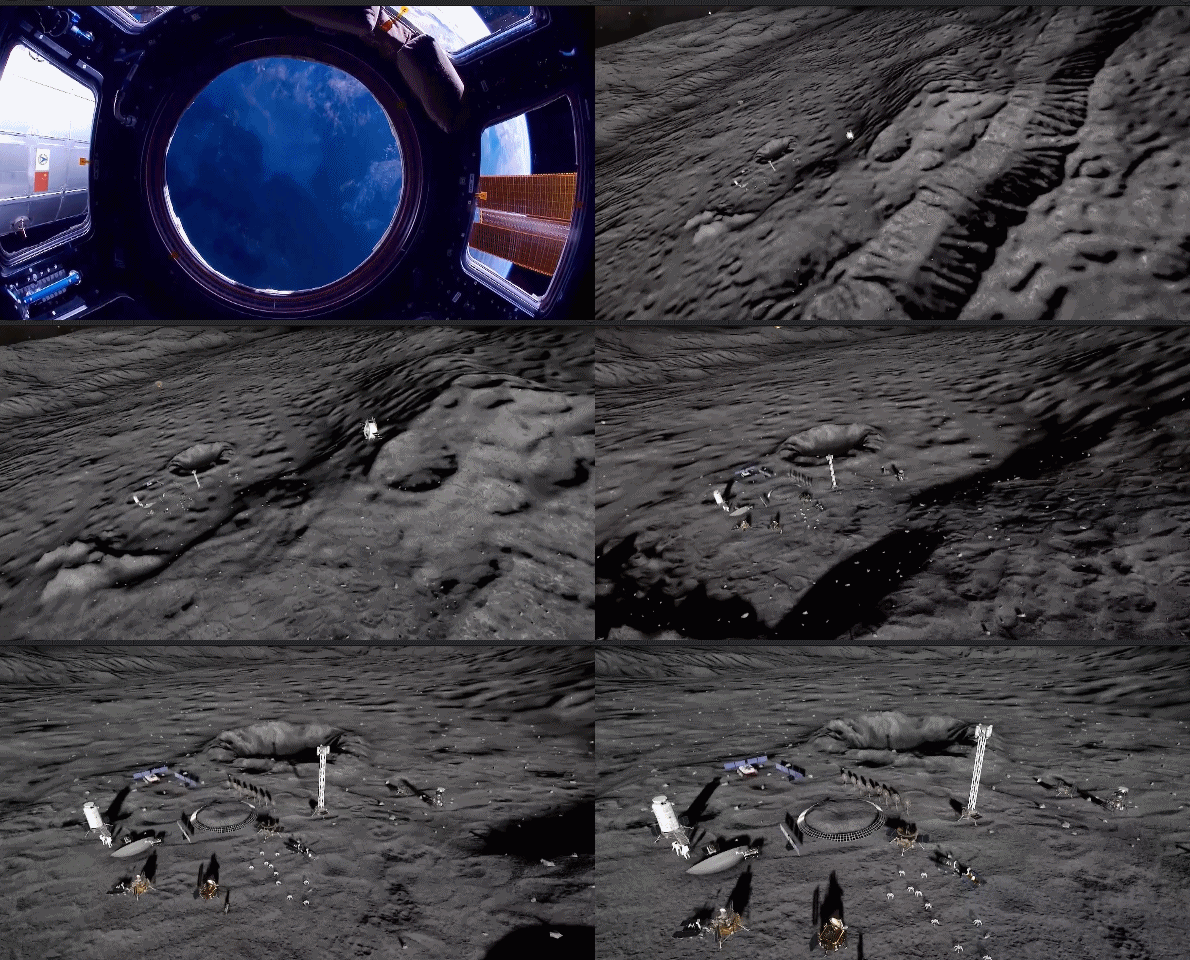
Lanyue’s development has reportedly entered the integration phase, and the first landing is expected near the lunar south pole, chosen for its ice resources and scientific interest.
A quiet rival to America’s Starship HLS
Compared to SpaceX’s Human Landing System (HLS) for NASA, Lanyue represents a very different philosophy.
While Starship HLS emphasizes reusability and massive payload capacity (over 100 tonnes on the surface), China prioritizes efficiency and reliability: a smaller, single-use spacecraft optimized for repeated missions.
| United States | China |
|---|---|
| Private modular design (SLS + Starship) | Fully integrated state system (Long March 10 + Mengzhou + Lanyue) |
| Focus on heavy-lift and reusability | Focus on simplicity and safety |

The U.S. is not betting on a single model: alongside SpaceX, Blue Origin is developing its own lander, the Blue Moon Mark 2, selected in 2023 as NASA’s second crewed lunar system. Smaller and more modular, Blue Moon is designed for shorter missions with a two-astronaut crew and a high level of automation.
Operationally, both superpowers could reach the lunar surface around 2030, each landing crews of two to four astronauts.
The great leap
China’s lunar landing sequence mirrors Apollo’s profile, adapted to modern technology:
-
Orbital rendezvous between Mengzhou and Lanyue.
-
Propelled descent to the surface.
-
Scientific stay (sample collection, sensors, geological studies).
-
Ascent module liftoff to rejoin Mengzhou.
-
Return to Earth after service module separation.
With Lanyue, China completes its crewed lunar trilogy:
-
Long March 10 for launch capability,
-
Mengzhou for crew transport,
-
Lanyue for the decisive step onto the lunar surface.
It’s both an engineering feat and a political milestone — the culmination of a journey that began with Chang’e-1 in 2007, strengthened by Chang’e-6 in 2024, and now driving toward a Chinese flag planted on the Moon before the end of the decade.
Sources:
-
CGTN – “China unveils Lanyue and Mengzhou, vehicles for manned lunar exploration,” February 24, 2024.
-
Xinhua English News – “China releases details of its manned lunar program,” 2024.
-
NASA Spaceflight.com – “Analysis of China’s dual-launch lunar mission profile,” 2025.
-
Wikipedia (EN) – Lanyue (spacecraft), accessed October 2025.
Une réflexion sur “ Presentation of Lanyue: China’s Crewed Lunar Lander ”
Les commentaires sont fermés.