





Zhuque-3: China Successfully Lands a Reusable Rocket First Stage
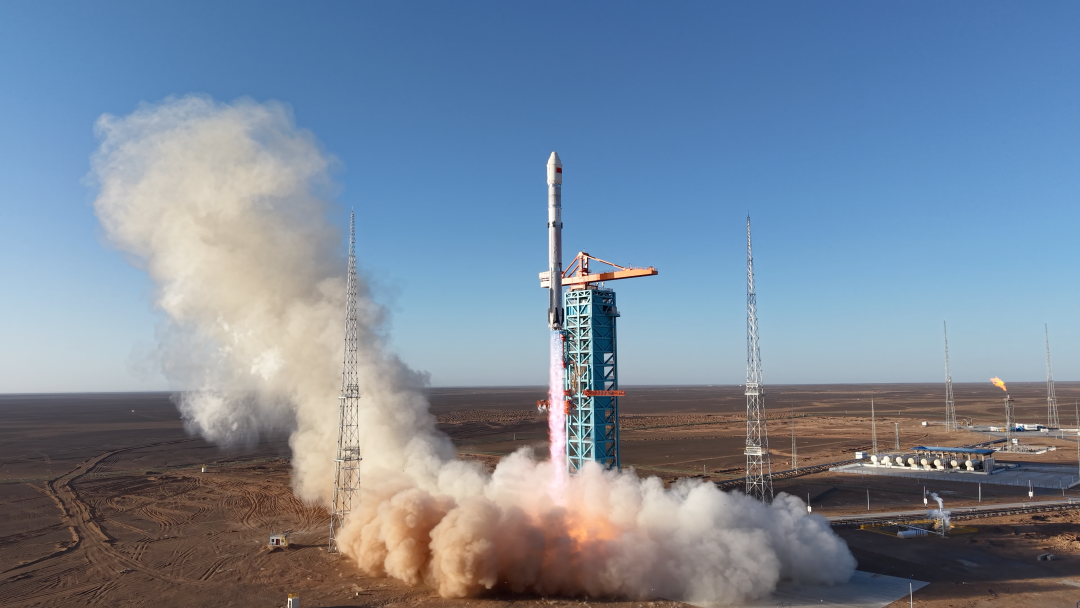
China has taken a major step toward operational reusable launch vehicles. On August 19, 2026, LandSpace successfully launched its Zhuque-3 Y2 rocket, placed a satellite into orbit and brought the vehicle’s first stage back to Earth for a controlled vertical landing. The achievement marks China’s first successful ground recovery of an orbital-class booster using deployable landing legs.
The mission lifted off at 7:35 a.m. Beijing time from the Dongfeng Commercial Space Innovation Pilot Zone in northwestern China, near the Jiuquan launch area. Zhuque-3 was carrying the Honghu-03 satellite, which was successfully deployed into its planned orbit.
But for LandSpace, reaching orbit was only part of the mission.
The most closely watched objective was the return of Zhuque-3’s first stage — an operation the company had attempted, but failed to complete, during the rocket’s maiden orbital flight in December 2025.
This time, the landing was successful.
Zhuque-3’s first stage returns to Earth
Approximately 137 seconds after liftoff, Zhuque-3’s first and second stages separated.
While the upper stage continued toward orbit, the booster began its return sequence. It performed a high-altitude attitude adjustment, a propulsive deceleration manoeuvre, controlled aerodynamic flight through the atmosphere and a final landing burn before deploying its landing legs.
The first stage eventually touched down at the designated recovery site in Minqin County, Gansu Province, around 390 kilometres southeast of the launch site.
Meanwhile, the second stage completed its mission and successfully placed Honghu-03 into orbit.
LandSpace had therefore achieved both major goals of the flight: a successful orbital mission and the controlled recovery of Zhuque-3’s booster.
A first for China — with an important distinction
The landing represents a major milestone for China’s reusable launch vehicle programme, although it was not the country’s first recovery of an orbital rocket stage.
On July 10, 2026, China successfully recovered the first stage of an experimental Long March 10B using a very different system. Instead of landing on deployable legs, the stage was captured by a system of steel cables and hooks above a platform at sea.
Zhuque-3 therefore achieved something different and significant: China’s first successful controlled landing on land of an orbital-class booster using deployable landing legs.
The method closely resembles the approach pioneered operationally by SpaceX with Falcon 9.
The success also puts LandSpace among a very small group of private companies to have landed an orbital-class booster after launch, alongside SpaceX and Blue Origin.
What is Zhuque-3?
Zhuque-3 is a two-stage reusable launch vehicle developed by LandSpace, one of China’s most prominent commercial space companies.
The Zhuque-3 Y2 configuration flown on August 19 stands 66.1 metres tall, with a 4.5-metre diameter for both main stages and a payload fairing measuring 5.2 metres in diameter.
One of Zhuque-3’s most distinctive features is its stainless-steel structure.
The choice immediately invites comparisons with SpaceX’s Starship, which also makes extensive use of stainless steel. LandSpace says the material offers high thermal resistance while potentially lowering manufacturing costs compared with more conventional aerospace alloys.
The first stage is powered by nine TQ-12A engines, burning a combination of liquid methane and liquid oxygen. The engines can throttle between 40% and 110% of their rated thrust, an important capability during ascent and particularly during the final landing manoeuvre.
Methane is also attractive for reusable launch vehicles because it can burn more cleanly than kerosene, potentially reducing deposits in engines and simplifying refurbishment between flights.
How powerful is Zhuque-3?
According to LandSpace figures reported by Reuters, Zhuque-3 can place approximately 14.2 metric tonnes into low Earth orbit when flown without recovering the booster.
That remains below the maximum payload capability of Falcon 9, which can carry more than 22 tonnes to low Earth orbit when flown expendably.
But Zhuque-3’s long-term importance is not simply determined by how much payload it can carry.
Its real objective is reusability.
LandSpace ultimately wants its first-stage boosters to fly as many as 20 missions. If the company can recover boosters reliably and return them to flight with limited refurbishment, Zhuque-3 could significantly reduce launch costs and support much higher launch rates.
The first Zhuque-3 landing attempt failed
LandSpace had already attempted to recover a Zhuque-3 first stage during the rocket’s maiden orbital launch on December 3, 2025.
That flight was only a partial success.
The rocket successfully reached orbit, proving the basic launch vehicle architecture. However, the booster failed during the final portion of its landing sequence and did not achieve a controlled touchdown.
Despite the loss of the booster, the mission provided LandSpace with valuable engineering data covering atmospheric re-entry, guidance, aerodynamic control and engine relight operations.
For Zhuque-3 Y2, the company introduced several modifications.
Among them, LandSpace simplified the landing engine ignition sequence, improved prediction and control of the expected landing point and strengthened the vehicle’s ability to withstand the intense mechanical and thermal loads experienced during atmospheric re-entry.
Eight months after the first attempt, those modifications appear to have delivered the desired result.
Landing a booster is only the beginning
Successfully recovering an orbital booster is a technological achievement.
But recovering it is not the same thing as reusing it.
The economic value of a reusable launch vehicle depends on how quickly and cheaply the recovered hardware can be inspected, refurbished and flown again.
LandSpace will therefore now examine the recovered Zhuque-3 booster, including its engines, propellant tanks, structure and landing systems.
The company has said that it intends to fly a recovered first stage again within the next six months. LandSpace describes the programme as moving from the validation of recovery technology toward the validation of operational reuse.
That future mission could be even more significant than the August 19 landing.
SpaceX transformed Falcon 9 economics not merely by landing boosters, but by flying the same hardware repeatedly and progressively reducing turnaround times between missions.
LandSpace now needs to demonstrate the same fundamental principle.
China accelerates its reusable rocket ambitions
Zhuque-3’s landing comes during a period of rapid progress in China’s reusable launch sector.
LandSpace’s unsuccessful December 2025 attempt was followed by another failed recovery involving the state-developed Long March 12A. China then successfully demonstrated the Long March 10B sea-based capture system in July 2026 before achieving Zhuque-3’s powered ground landing in August.
Reusable rockets are becoming increasingly important to China as the country prepares to deploy very large constellations of satellites in low Earth orbit.
Launching hundreds or eventually thousands of spacecraft requires not only capable rockets, but also lower costs and much higher launch frequencies.
Zhuque-3 was specifically developed around that objective, combining methane propulsion, a stainless-steel structure and first-stage recovery in an attempt to create a launch system capable of supporting frequent commercial missions.
A major milestone — but Zhuque-3 still has much to prove
The August 19 flight represents an important turning point for LandSpace.
In less than a year, Zhuque-3 has progressed from an orbital debut accompanied by a failed landing attempt to a mission combining successful satellite deployment and controlled first-stage recovery.
Comparisons with Falcon 9 are inevitable, but they should still be treated cautiously.
SpaceX has spent years building an operational system based on frequent launches and repeated booster reuse. Successfully landing a first stage is therefore only the first major step toward achieving comparable economics.
For LandSpace, the next challenge is clear: fly the recovered booster again and demonstrate that Zhuque-3 can become a genuinely reusable operational launch vehicle.
If the company succeeds, Zhuque-3 could become one of the most important commercial launchers emerging from China — and one of the most closely watched competitors in the global reusable rocket market.