


Nancy Grace Roman Space Telescope: Exploring the Dark Universe and Discovering New Exoplanets

Nancy Grace Roman Space Telescope: Exploring the Dark Universe and Discovering New Exoplanets
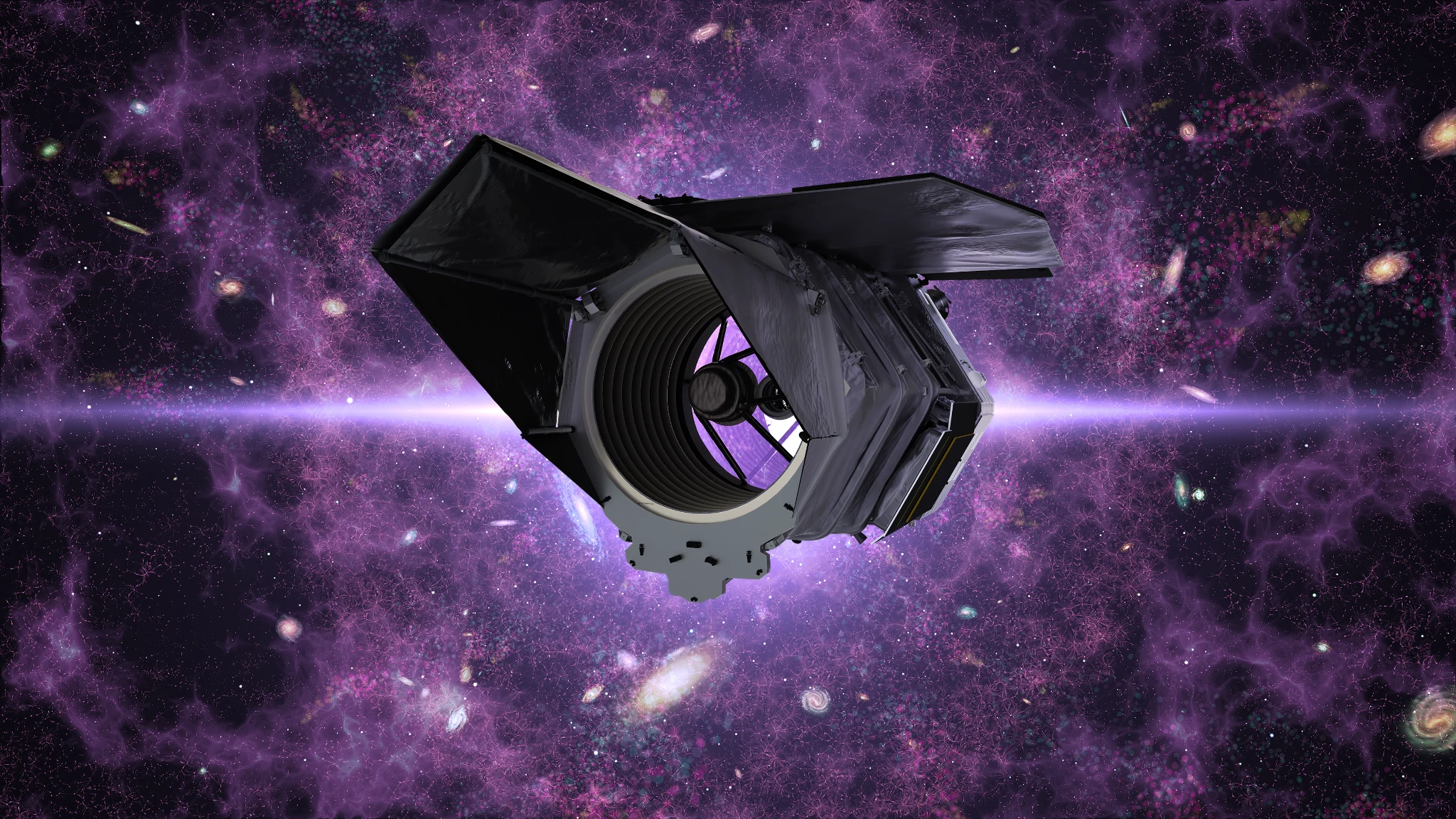
The Nancy Grace Roman Space Telescope is one of NASA’s major space observatories designed to explore the Universe on an unprecedented scale. With its exceptionally wide field of view, 300-megapixel camera and advanced coronagraph technology, Roman will help astronomers investigate dark energy and dark matter, study the evolution of galaxies, and conduct a new census of exoplanets throughout the Milky Way.
Roman features a 2.4-meter primary mirror, the same diameter as the Hubble Space Telescope’s mirror. However, the two observatories were designed with very different approaches. Roman’s greatest strength is its ability to observe enormous areas of the sky while maintaining image sharpness comparable to Hubble.
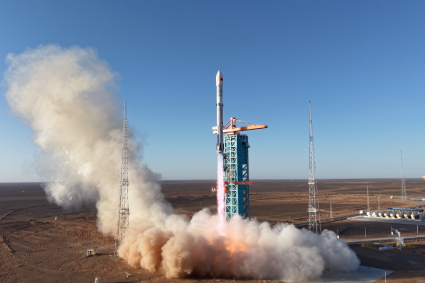
The Nancy Grace Roman Space Telescope launched on August 30, 2026, aboard a SpaceX Falcon Heavy from NASA’s Kennedy Space Center in Florida. The observatory is now traveling toward its operational orbit around the Sun-Earth L2 Lagrange point, approximately 1.5 million kilometers (930,000 miles) from Earth.
Falcon Heavy lifts off from pad 39A in Florida for the 13th time! pic.twitter.com/qh63XvOVtV
— SpaceX (@SpaceX) August 30, 2026
Nancy Grace Roman: A Telescope Designed to Observe the Universe on a Grand Scale
Roman is equipped with a 2.4-meter-wide primary mirror. While its diameter is identical to Hubble’s primary mirror, advances in materials and engineering have made Roman’s mirror considerably lighter, with a mass of about 186 kilograms.
Once fully deployed, the observatory measures approximately 12.7 meters (41.5 feet) long and 4.4 meters (14.5 feet) wide.
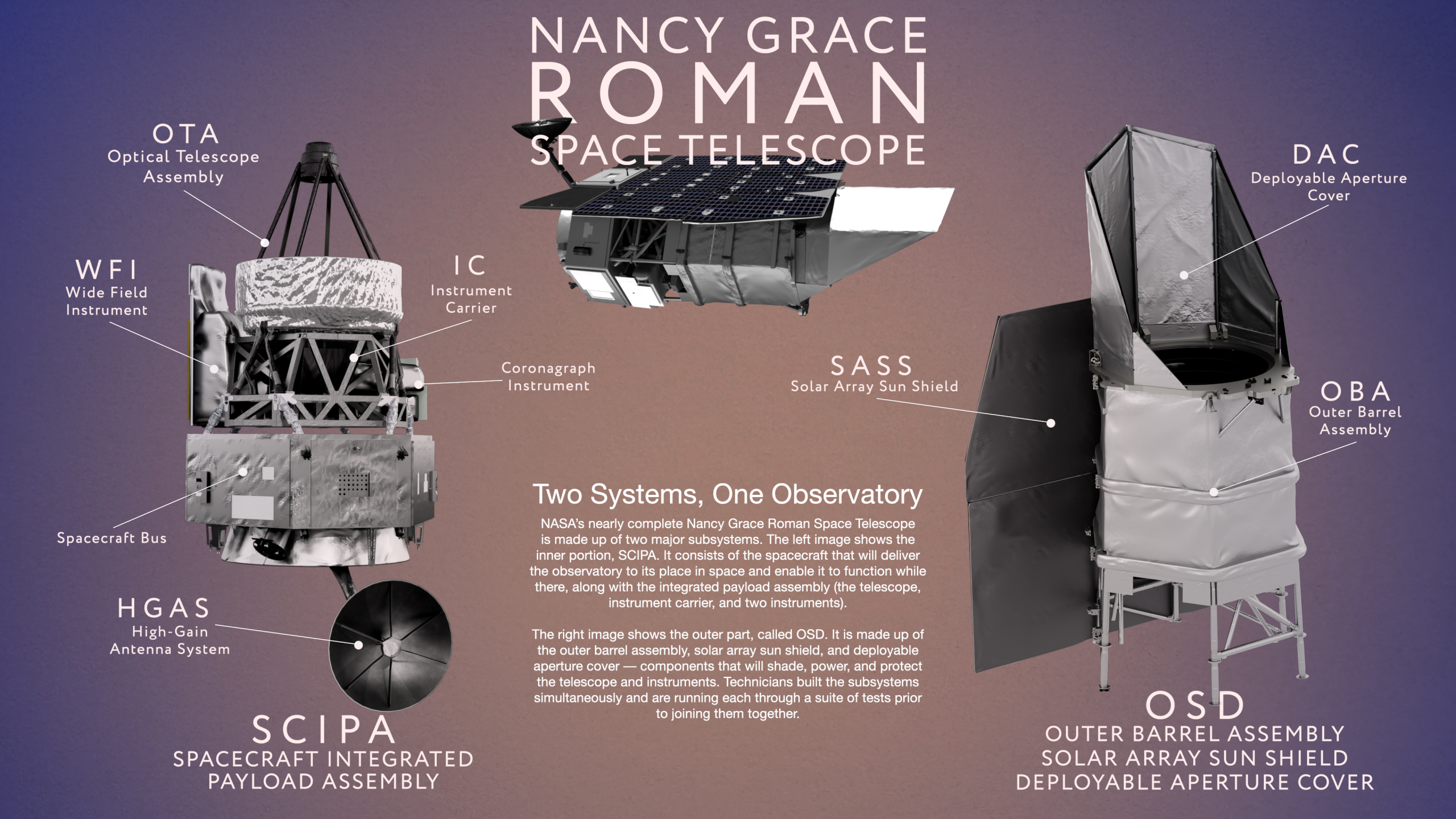
Roman will primarily observe the Universe at visible and near-infrared wavelengths. It carries two very different instruments: the Wide Field Instrument (WFI), Roman’s primary science instrument, and the Coronagraph Instrument, a technology demonstration designed in part to advance techniques for directly imaging exoplanets.
The telescope is named after Nancy Grace Roman, NASA’s first chief astronomer. She played a major role in establishing NASA’s space astronomy program and helped lay the foundations for what would eventually become the Hubble Space Telescope, earning her the nickname “Mother of Hubble.”
A Field of View That Changes How We Observe the Universe
Roman’s defining characteristic is its extraordinarily wide field of view.
Hubble can produce extremely detailed images, but each exposure covers a relatively small area of the sky. Roman will achieve similar angular resolution while observing a field approximately 100 times larger than Hubble’s Wide Field Camera 3 infrared channel.
A single observation with Roman’s primary instrument can cover an area of the sky larger than the apparent size of the full Moon.
This fundamentally changes the scale at which astronomers can conduct observations.
For some surveys, Roman will be able to map the sky up to 1,000 times faster than Hubble, while retaining comparable infrared sensitivity and resolution.
One simple comparison illustrates the difference: if Hubble excels at photographing individual trees, Roman will be able to photograph the forest while still resolving the trees.
This capability will allow astronomers to move beyond studying small numbers of individual targets and instead build enormous catalogs containing millions of galaxies, stars, supernovae and other cosmic objects.
The Wide Field Instrument: A 300-Megapixel Camera for Mapping the Cosmos
The Wide Field Instrument, or WFI, is Roman’s primary scientific instrument.
It combines a large astronomical camera with spectroscopic capabilities, allowing scientists not only to image celestial objects but also to obtain additional information from their light. Its focal plane consists of 18 detectors totaling approximately 300 million pixels, covering a field of view of about 0.281 square degrees.
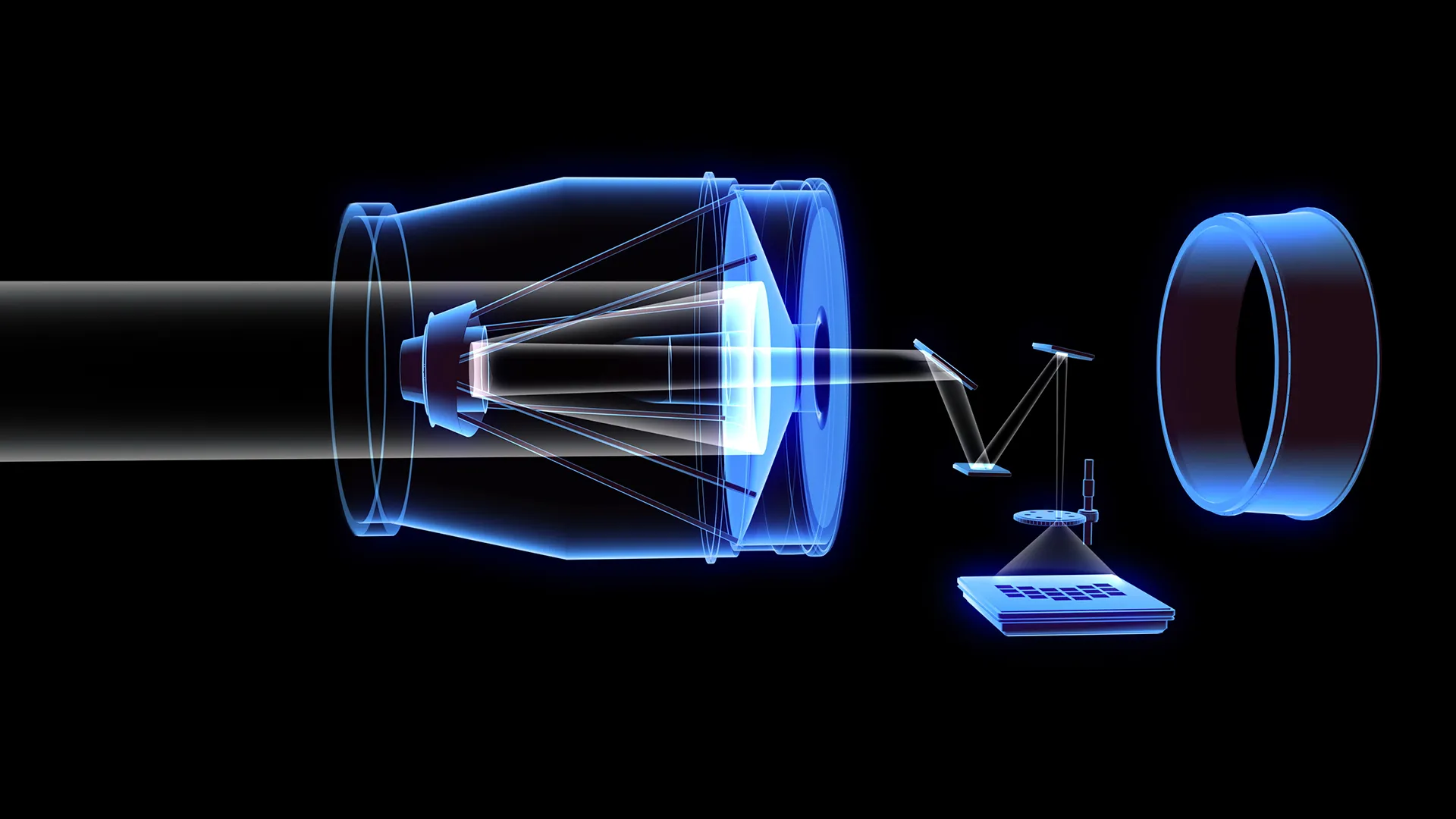
The WFI uses multiple filters as well as slitless spectroscopy. This means Roman will be able to image celestial objects while also analyzing their light to determine properties such as the distances of enormous numbers of galaxies.
The instrument’s real advantage is the scale on which it can perform these measurements.
Rather than examining one galaxy or one star at a time, Roman will conduct enormous systematic surveys containing billions of cosmic objects.
This is at the heart of Roman’s scientific concept: applying the observational quality of a major space telescope to extraordinarily large populations of astronomical objects.
The Coronagraph Instrument: A Step Toward Imaging Earth-Like Worlds
Roman’s second instrument has a very different purpose. The Coronagraph Instrument is designed to demonstrate technologies that could eventually allow astronomers to directly observe increasingly faint planets orbiting other stars.
Directly imaging an exoplanet is extremely difficult. A star can be millions or billions of times brighter than the planets surrounding it, and from our perspective those planets appear extremely close to their host star. Their faint reflected light is therefore overwhelmed by stellar glare.
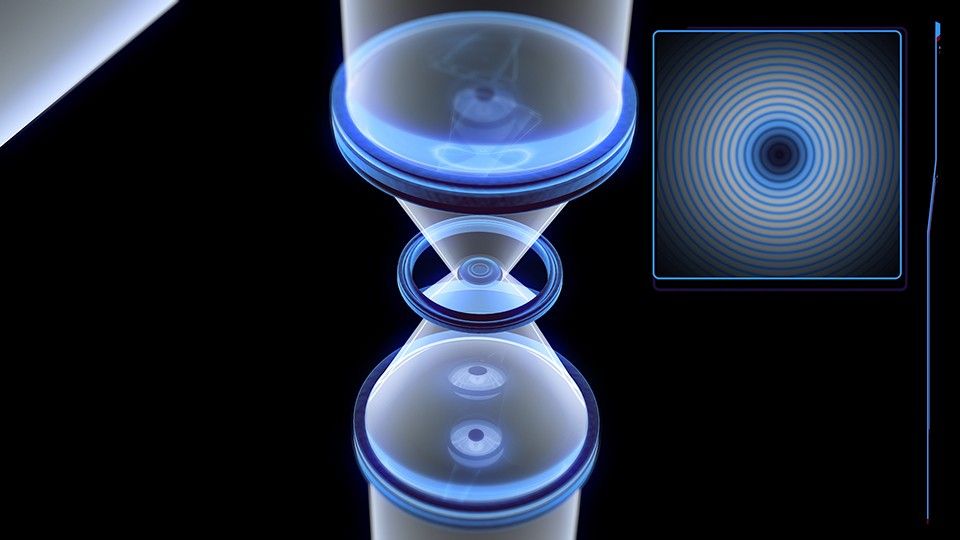
A coronagraph works by suppressing the light from the star with extraordinary precision, making much fainter nearby objects potentially visible.
Roman’s instrument combines sophisticated coronagraph masks with extremely precise deformable mirrors that can correct imperfections in the incoming wavefront and control stray starlight.
However, an important distinction must be made: Roman’s coronagraph is primarily a technology demonstration. It is not Roman’s main science instrument and was not designed to conduct a vast direct-imaging census of exoplanets.
Instead, Roman will demonstrate in space whether these technologies can reach the levels of performance required to directly observe planets far fainter than their stars.
The lessons learned could then be incorporated into future observatories. Roman therefore represents an important technological step toward NASA’s proposed Habitable Worlds Observatory, whose long-term goal includes directly imaging and characterizing potentially habitable planets around nearby stars.
Roman could therefore contribute indirectly to one of astronomy’s great goals for the coming decades: obtaining images and spectra of Earth-like planets orbiting other stars.
Investigating Dark Energy and Dark Matter
One of Roman’s main scientific objectives concerns two of the greatest mysteries in modern cosmology: dark matter and dark energy.
Observations have shown that the expansion of the Universe is accelerating. Astronomers use the term “dark energy” to describe whatever may be driving this acceleration, but its true nature remains unknown.
Dark matter presents another mystery. It does not emit light and therefore cannot be observed directly like a star or galaxy. Its existence is instead inferred from the gravitational effects it has on visible matter and light.
Roman will use its enormous field of view to observe huge populations of galaxies and map their distribution across different periods in cosmic history.
To reconstruct the history of cosmic expansion, the telescope will combine several complementary techniques. These include observations of Type Ia supernovae, three-dimensional mapping of galaxies and galaxy clusters, and measurements of large-scale cosmic structure.
Roman will also measure weak gravitational lensing. Matter located between distant galaxies and the observer subtly distorts the light reaching us. By statistically measuring these tiny distortions across hundreds of millions of galaxies, astronomers can reconstruct how matter is distributed throughout the Universe.
Together, these methods will allow scientists to study both the history of the Universe’s expansion and the growth of cosmic structure over time.
Roman could therefore help determine whether current models of dark energy adequately describe the Universe — or whether our understanding of gravity itself needs to be reconsidered on cosmic scales.
Roman Will Conduct a New Census of Exoplanets
Exoplanets represent another major component of Roman’s scientific mission.
The observatory will conduct a statistical census of planetary systems in the Milky Way, particularly through a technique known as gravitational microlensing.
Microlensing occurs when one star passes almost directly in front of a more distant background star. The gravity of the foreground object bends and magnifies the light from the background star.
If the foreground star hosts a planet, the planet’s own gravity can produce an additional, characteristic disturbance in the observed signal.
To detect these rare events, Roman will monitor approximately 100 million stars for hundreds of days, looking toward the crowded central regions of the Milky Way.
NASA estimates that this survey could discover around 2,500 exoplanets through gravitational microlensing.
The technique is sensitive to a population of worlds very different from those primarily discovered through transit surveys. Roman could detect planets orbiting relatively far from their host stars and worlds with masses below that of Mars.
The same observations can also be searched for planetary transits, potentially adding a much larger population of exoplanet candidates to Roman’s discoveries.
Combined with discoveries from other missions and observatories, Roman will therefore help astronomers answer a fundamental question: what does a representative population of planetary systems in our galaxy actually look like?
Galaxies, Black Holes and Rare Events: A Discovery Machine
Roman’s primary science objectives are likely to represent only part of what the observatory ultimately discovers.
Its combination of wide-field imaging and high resolution will allow researchers to investigate many areas of astronomy, including galaxy formation and evolution, stellar birth, star clusters, black holes, supernovae, objects in the outer Solar System and transient astronomical events.
Roman should be particularly effective at finding rare phenomena.
When a telescope observes only a tiny region of the sky, the probability of witnessing an unusual event is relatively low. By monitoring much larger areas with excellent sensitivity, Roman will dramatically increase the chances of detecting poorly understood — or potentially completely unexpected — phenomena.
This capability comes with another consequence: an enormous amount of information must be transmitted, processed and archived.
Roman is expected to return approximately 1.4 terabytes of scientific data per day, an unprecedented data rate for a major NASA astrophysics mission.
The observatory’s vast datasets will also become a scientific resource in their own right. Astronomers will be able to revisit Roman’s catalogs for years, conducting studies that may not even have been envisioned when the mission was designed.
This is one of the defining characteristics of major space observatories: some of their most important discoveries may be the ones nobody expected them to make.
Roman, Hubble, James Webb and Euclid: Complementary Observatories
The Nancy Grace Roman Space Telescope should not be considered a replacement for Hubble or the James Webb Space Telescope. Their capabilities are different and, in many cases, highly complementary.
Hubble, with its 2.4-meter mirror, has transformed almost every area of astronomy since its launch in 1990. It retains important capabilities across ultraviolet, visible and near-infrared wavelengths, along with an extraordinary scientific archive accumulated over several decades.
James Webb uses a much larger 6.5-meter primary mirror and is optimized for infrared astronomy. Its sensitivity allows it to examine specific regions and individual targets in exceptional detail, from some of the earliest galaxies to star-forming regions and exoplanet atmospheres.
Roman also has a 2.4-meter mirror, but its major advantage is its enormous field of view. It will be able to discover and map huge populations of objects, identifying particularly interesting targets that Webb and other observatories can subsequently investigate in much greater detail.
Roman will also complement ESA’s Euclid space telescope, launched in 2023 and also dedicated in large part to investigating the dark Universe. Euclid is conducting an exceptionally broad survey of the sky, while Roman will provide deeper, higher-resolution observations across selected regions.
Together, these observatories can operate at different scales: wide surveys discover and classify objects, while more specialized observations can examine selected targets in far greater detail.
A Mission From the Sun-Earth L2 Lagrange Point
Roman will conduct its observations from an orbit around the Sun-Earth L2 Lagrange point, approximately 1.5 million kilometers (930,000 miles) from Earth. It will therefore operate in the same general region of space used by the James Webb Space Telescope and Euclid.
This location keeps the Sun, Earth and Moon in broadly the same direction relative to the observatory, helping Roman protect its telescope and instruments from unwanted light and heat while maintaining a stable observing environment.
Roman’s primary science mission is planned to last five years, although the observatory has been designed with the possibility of continuing operations beyond its nominal mission if its condition and resources allow.
Why the Nancy Grace Roman Space Telescope Could Transform Astronomy
Roman ultimately introduces a different scale to the exploration of the Universe. Where major space telescopes have often concentrated their capabilities on extremely detailed observations of individual targets or relatively small regions, Roman combines excellent resolution with the ability to survey enormous areas of the sky.
It will allow astronomers to move from studying handfuls of objects to analyzing populations numbering in the millions or even billions.
Those enormous datasets should improve our understanding of the structure and evolution of the Universe, provide a far more complete picture of planetary systems across the Milky Way, and potentially reveal phenomena that astronomers do not yet know to look for.
Following its launch on August 30, 2026, the Nancy Grace Roman Space Telescope is traveling toward its orbit around L2 and entering the commissioning phase that will prepare the observatory for science operations.
Only then will Roman’s real mission begin: observing enough of the Universe, with enough detail, to reveal phenomena that previous space telescopes could simply have missed.
Source
The NASA website dedicated to the Nancy Grace Roman Telescope is here.